REVIEW · UGANDA
7 Days Uganda Birding and Wildlife
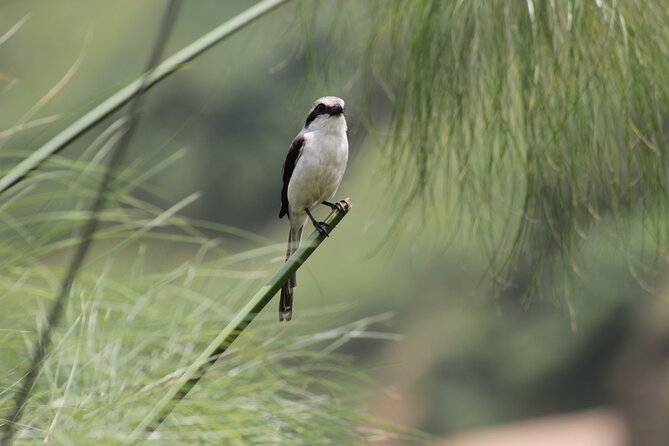
The great prize here is the shoebill at Mabamba Wetland, followed by a quickening change of scenery: open grassland at Lake Mburo, high forest at Bwindi, and game country around Queen Elizabeth National Park. In seven days, you get a serious sample of western Uganda’s best birding sites without giving up mammals and scenery photography.
I like the smart route and the private format. You can spend real time on birds such as the African Green Broadbill, African Finfoot, and Albertine Rift endemics, while also looking for zebra, lion, elephant, buffalo, and Uganda kob. I also like that transport, park fees, water, meals, and site guides are included.
The trade-off is mileage. Several days involve long drives, and Day 7 is mainly a return to Entebbe. You should be comfortable with early starts, rougher park roads, changing weather, and long periods in a vehicle.
Key points at a glance
- Mabamba’s papyrus channels: Start with one of Africa’s most sought-after birds, the shoebill, in a community-protected wetland near Kampala.
- Lake Mburo after dark: Combine a boat outing with a night drive for African Finfoot, night herons, nightjars, bush babies, and nocturnal mammals.
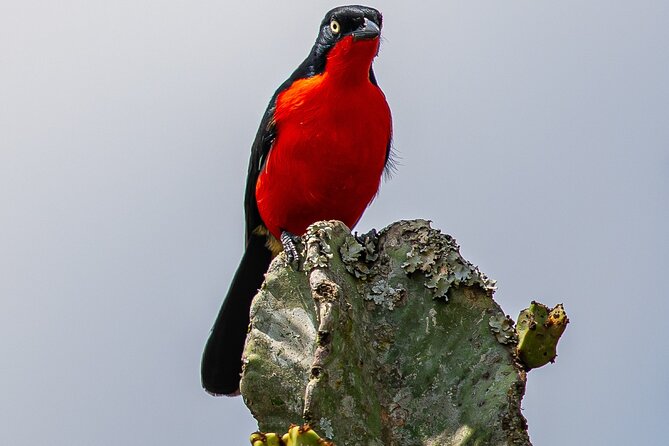
- Bwindi’s Albertine Rift specialties: Spend two substantial birding days seeking African Green Broadbill, Grauer’s Rush Warbler, handsome francolin, sunbirds, alethes, and apalises.
- Ishasha wildlife country: Watch for lions, elephants, buffalo, Uganda kob, waterbuck, and small grassland birds while crossing toward Queen Elizabeth National Park.
- Private seven-day arrangement: Your group travels with its own birding guide and driver rather than joining a large mixed party.
- A bird-first price with broad coverage: At $2,466 per person, the package includes transport, park and activity fees, water, meals, and guiding, but not international flights, tips, or souvenirs.
Why this seven-day Uganda route works
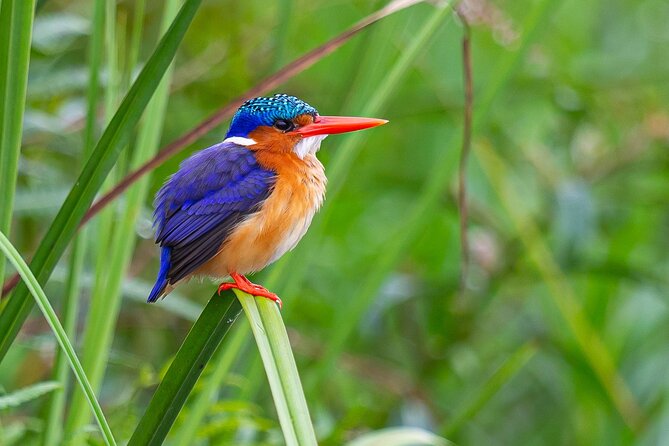
This is not a general sightseeing circuit with a few bird stops added on. The route links Uganda’s most useful birding habitats in a compact week. Wetland, savanna, lake shore, montane forest, and open plains all appear, giving you a long species list and a good chance to see how sharply Uganda’s birdlife changes from one region to the next.
The trip also suits photographers. You can work with close wetland subjects at Mabamba, broad views around Lake Mburo, dark forest birds at Bwindi, and mammals in open country. The schedule is busy, though, so you should think of this as a productive field trip rather than a slow holiday.
A private tour makes the pace easier to manage. If your group wants to linger over a rare bird, stop for a photograph, or shift attention from mammals to birds, you have more room to do so than on a fixed large-group departure. The guide and driver combination matters here, since finding shy forest birds often depends on patience and local field experience.
More Week-Long Trips in the world:
- 7 Day Golden Triangle Tour with Wildlife-Taj Mahal Tigers & Birds
★ 5.0 · 8 reviews - Laid-back birdwatching week
★ 5.0 · 4 reviews
Day 1: Shoebills at Mabamba, then Lake Mburo
The opening morning begins early, with breakfast followed by birding at Mabamba Wetland. This papyrus wetland is made up of narrow channels and lagoons, and local communities help protect it. Its main attraction is the shoebill, Uganda’s best-known bird and the only member of its family.
You should approach this stop with realistic expectations. A shoebill is never a guaranteed sighting, and wetland conditions can affect how easily you find one. Still, Mabamba is an important place to try because the habitat is specifically suited to the species, and the morning timing gives you a useful start before the road journey.
After Mabamba, the tour heads toward Lake Mburo National Park, with lunch at the Green Equator stop on the Masaka Road. The equator visit is short, but it breaks up the drive and gives you time for photographs and a simple explanation of the northern and southern hemispheres. It is a familiar stop, not a major birding site, but it adds variety to a long travel day.
The listed journey to Lake Mburo takes about five hours, and arrival is expected around 5 p.m. The remaining daylight is used for birding in the park. That final session may be brief, so you should treat it as an introduction rather than a full game drive.
Day 2: Lake Mburo by water and after dark
Lake Mburo receives the fullest single day on the schedule. The park is known here for mammals including zebra, eland, topi, impala, Cape buffalo, and warthog. It is a useful change from the forest ahead, with more open country and better chances to scan for larger animals.
The boat outing is the birding centerpiece. The target list includes African Finfoot, white-backed and black-crowned night herons, and giant kingfisher. Water-based birding gives you a different angle from a vehicle, especially along quiet lake edges and channels.
The day also includes a night drive. This is a real advantage for a birding itinerary because many tours stop at sunset. The possible sightings include black-shouldered nightjar, northern Tanzania fiery-necked nightjar, bush babies, and other nocturnal mammals.
The schedule lists up to 11 hours at the park, so pace yourself. Bring a warm layer for the evening, keep your flashlight handy, and expect a long day split between daytime wildlife, water birding, and night activity. The tour includes the listed park and activity fees, so these core outings do not require a separate payment.
Day 3: The long transfer to Bwindi
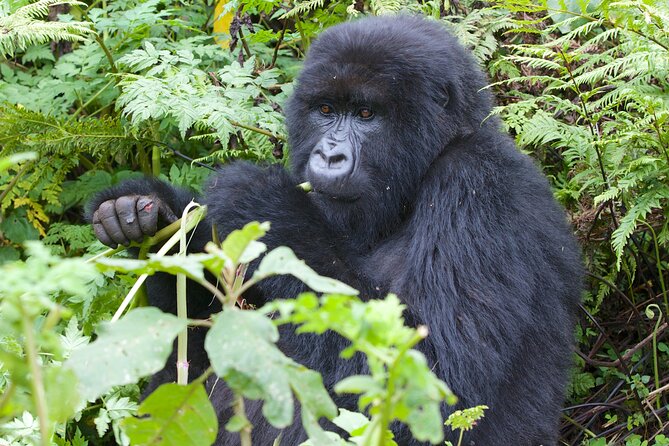
After breakfast, you transfer toward Bwindi Impenetrable National Park, stopping for lunch in Ntungamo. The drive is listed at about six hours, which makes this another day when the journey is part of the experience.
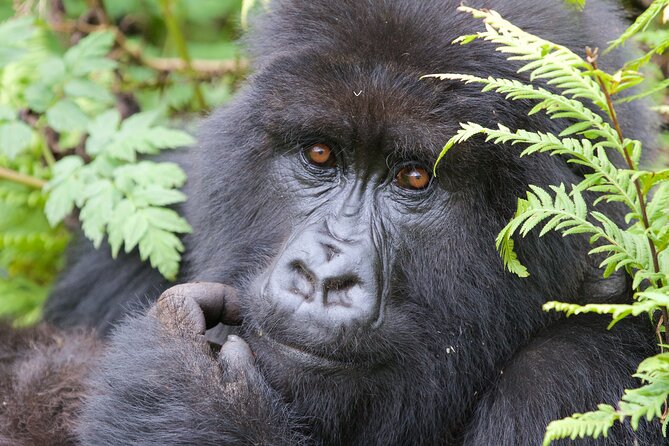
Bwindi is the major birding prize of the route. It is also famous for mountain gorillas, with about half of the world’s population found in the park according to the tour information. This itinerary is focused on birds rather than a gorilla trek, so you should not assume gorilla tracking is included.
Bwindi has about 350 recorded bird species, including 23 Albertine Rift endemics and at least 14 species recorded nowhere else in Uganda. That concentration explains why the route gives the park two birding days instead of treating it as a quick scenic stop.
If you arrive early enough, you bird the school trail before checking into the lodge. This is a practical use of the afternoon. The school trail gives you a first chance to get into forest habitat without waiting for the next morning, though the amount of time available depends on the road and your arrival.
A few more birding trips around the world worth a look
- Penguin Parade, & Wildlife Encounters Eco Tour from Melbourne
★ 5.0 · 3,774 reviews - Cape Town: Cape of Good Hope & Penguins Day Tour with Pickup
★ 4.7 · 3,362 reviews - Cape Point and Boulder’s Penguins Full Day Tour
★ 5.0 · 3,118 reviews - Cape of Good Hope & Boulder Penguins Full-Day Tour from Cape Town
★ 5.0 · 2,347 reviews
Day 4: Bwindi’s rare forest birds
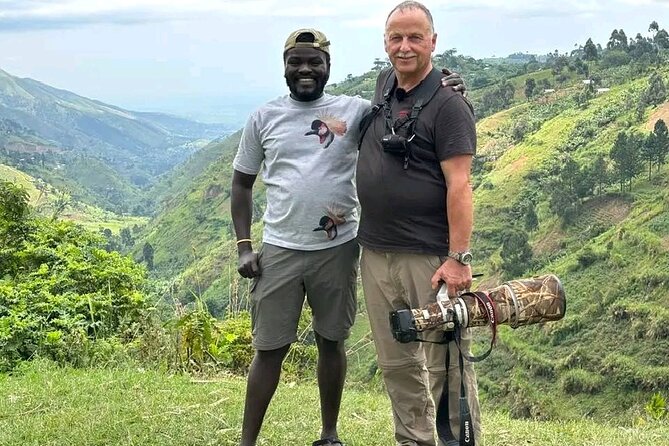
Day 4 is the most specialized birding day. The headline target is the African Green Broadbill, along with Grauer’s Rush Warbler and a long list of Albertine Rift species. These are not birds you casually pick up from a roadside viewpoint. You need a good guide, careful listening, and enough time in the right forest habitat.
Other targets include handsome francolin, blue-headed and blue-throated sunbirds, purple-breasted sunbird, red-throated alethe, mountain illadopsis, collared and mountain masked apalises, and yellow-eyed black flycatcher. High-altitude possibilities include bar-tailed trogon, Narina trogon, white-tailed crested flycatcher, Abyssinian hill babbler, and stripe-breasted tit.
The forest can be demanding. You should expect walking, uneven ground, and a need to stay alert for quick movement in thick vegetation. The tour asks for a moderate level of physical fitness, which is a fair warning even though the exact walking distance is not given.
Bring binoculars, a light rain layer, sturdy shoes, and patience. Forest birding rarely delivers a constant parade of easy views. The reward is a chance at specialized species that are difficult to find outside this part of Africa.
Day 5: Leaving Bwindi through Ishasha
The route exits Bwindi through the Kanungu area and continues toward the southern sector of Queen Elizabeth National Park. Birding remains part of the transfer, with a chance to look for the uncommon rufous-breasted wryneck.
The Ishasha area adds open-country species to the forest list. Possible birds include whinchats, greater scimitarbill, black kite, superb sunbird, and several quails, including little button, blue, common, and harlequin quails. Quails can be hard to spot in short grass, so this is a good place for the guide’s hearing and field experience to matter.
Mammals give the day extra weight. Cape buffalo, lions, elephants, Uganda kob, and waterbuck may appear along the route. The itinerary allows about seven hours for the transfer and birding, so conditions on the road and the time spent watching wildlife will shape the day.
I like this transition because it prevents the journey from becoming dead time. The limitation is that a transfer day cannot offer the same focused attention as a dedicated game drive. If a rare forest bird is your top goal, Day 4 is the stronger opportunity. If you want variety, Ishasha is a fine bridge between Bwindi and the plains.
Day 6: Kasenyi plains in Queen Elizabeth National Park
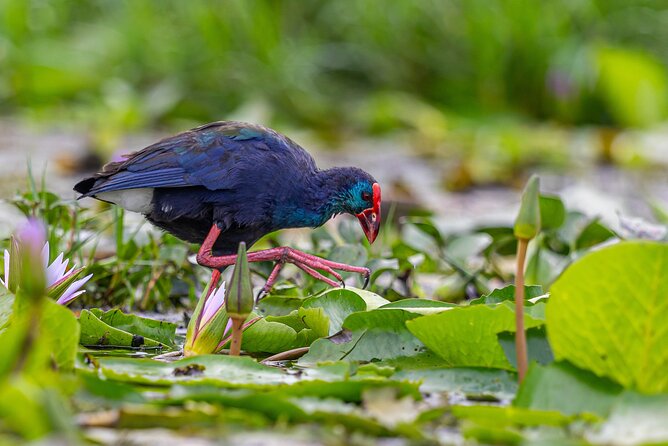
The final full day is based around a game drive in the Kasenyi plains of Queen Elizabeth National Park. This is broad, open country, and the bird list shifts again toward wetland edges, grassland, and raptors.
Possible sightings include African spoonbill, water thick-knee, three-banded plover, gray-headed gull, plain martin, lesser swamp-warbler, white-winged warbler, and several sandpipers. The list also includes Verreaux’s eagle-owl, Ovambo sparrowhawk, secretarybird, Caruther’s cisticola, African skimmers, black-headed gonolek, papyrus gonolek, red-faced cisticola, red-chested cuckoo, and northern puffback.
That range tells you what to expect: not one single signature bird, but a broad final sweep through different habitats. Mammals are also part of the day, so keep your attention divided between the grass, distant trees, and open tracks.
The listed game drive lasts about five hours. That is enough for a useful morning or extended outing, but it is not a full multi-day safari in Queen Elizabeth. If large mammals are your main reason for coming to Uganda, you may want a longer wildlife extension. If birds are the priority, the stop gives you a strong closing session before the return to Entebbe.
Day 7: Returning to Entebbe
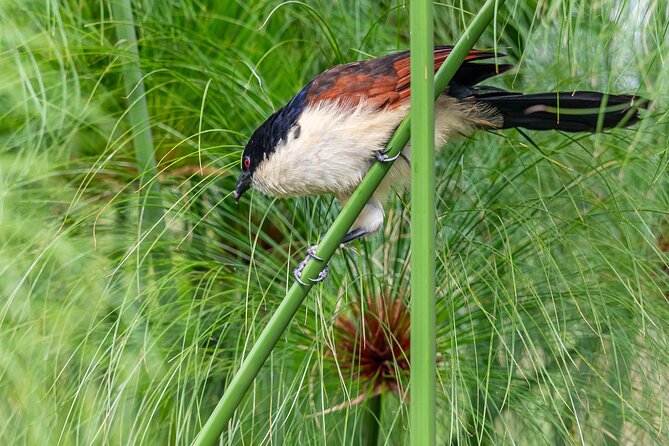
The last day is a long journey back to Entebbe, with several stops to stretch your legs and look for birds. The drive is listed at about seven hours, so do not treat this as a relaxed final morning.
This day is useful mainly for logistics and opportunistic birding. It gets you back toward the airport area while leaving room for roadside sightings. Your guide can make the most of the stops, but the exact birds and length of each break are not specified.
If you need to catch an international flight the same day, confirm the timing before booking. The tour provides a return to Entebbe, but the information does not promise a particular airport drop-off time or guarantee that it will fit a flight schedule.
What $2,466 covers, and where the value lies
The price is $2,466 per person. For a private seven-day trip through several national parks, that price has solid value because the main ground costs are bundled together.
Included are all transportation during the tour, park entrance and activity fees unless marked optional, drinking water, a professional birding guide and driver, site guides, five lunches, six dinners, and six breakfasts. You are paying not only for the vehicle and route, but also for access to several distinct birding areas and the guide’s ability to locate difficult species.
International flights, tips, and souvenirs are not included. Those extras are normal for this kind of trip, but you should budget for them separately. The meal count also suggests that some meals, especially during the final return or arrival period, may be outside the package.
The private format improves the value for a small group that wants a focused birding schedule. A single birder paying alone may find the total more significant, but the price is easier to justify if you care about endemic birds and want a guide rather than a self-drive trip.
Guide style and practical comfort
Davis is the named guide and driver associated with this operation. The strongest praise connected with him centers on two useful qualities: sharp bird-finding ability and an easy, funny manner. That combination matters on long drives and during quiet waits in the forest.
You should be ready for early mornings, long vehicle transfers, and some physically active birding. Moderate fitness is required, and the route includes national parks where roads and paths may be uneven.
Pickup is offered, and the usual meeting window is between 6 and 7 a.m., with operating hours listed from Monday through Sunday. The activity is private, so only your group participates. Confirmation is provided at booking, and the sites are near public transportation, though most of the actual circuit is handled by the included tour vehicle.
Free cancellation is available if you cancel at least 24 hours before the experience begins. Cancellations or changes inside that window are not accepted for a refund.
Should you book this Uganda birding circuit?
Book it if your priority is a high-yield birding route with a serious chance at the shoebill, Albertine Rift endemics, forest specialties, and a useful selection of mammals. It is especially well suited to birders who want private guiding and do not want to organize transport, permits, meals, and park access separately.
Think twice if you want a slow safari, luxury lodge time, or a trip centered mainly on gorilla tracking. The route covers a lot of ground, and Day 7 is largely a return journey. For the right person, though, the mix is unusually strong: wetland on Day 1, nocturnal wildlife at Lake Mburo, rare forest birds at Bwindi, and open-country game around Ishasha and Queen Elizabeth.
FAQ
How long is the Uganda birding and wildlife tour?
The experience lasts approximately seven days.
Where does the tour begin?
The tour is based in Kampala, with pickup offered. The listed meeting window is between 6 and 7 a.m.
Is this a private tour?
Yes. Only your group participates.
What is included in the price?
The price includes transportation during the tour, park entrance and activity fees unless marked optional, drinking water, a professional birding guide and driver, site guides, five lunches, six dinners, and six breakfasts.
Are international flights included?
No. International flights, tips, and souvenirs are not included.
What level of fitness is needed?
A moderate level of physical fitness is recommended. The route includes long drives, national park outings, and birding in forest and other outdoor settings.
Newest birding reviews around the world
- Walvis Bay Shore Excursion: Flamingos, Dune 7, Swakopmund★ 5.0 · 3 reviews
- York: Entry to York bird of prey centre★ 5.0 · 7 reviews
- VIP falconry taster session★ 5.0 · 2 reviews
- Vila Franca do Campo: Marine Life & Bird Watching & Islet Tour★ 4.4 · 9 reviews
- Ushuaia: Gable Island and Penguin Colony with Lunch★ 4.8 · 2 reviews
- Vestmannaeyjar: Puffin, Island, and Volcano Boat Tour★ 4.4 · 7 reviews
- Visit to Madeira Bird Island★ 4.6 · 22 reviews
- USHUAIA | Navigation: Sea Lions, Birds and Lighthouse★ 3.3 · 4 reviews
Birdwatching Tours, side by side.
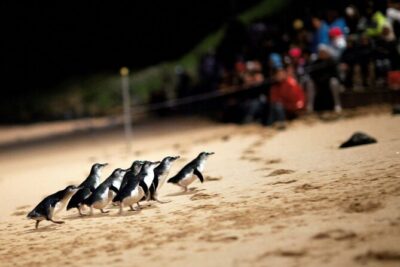
Penguin Parade, & Wildlife Encounters Eco Tour from Melbourne
Read our review →
Cape of Good Hope & Penguins Day Tour with Pickup
Read our review →
Cape Point and Boulder’s Penguins Full Day Tour
Read our review →
Cape of Good Hope & Boulder Penguins Full-Day Tour from Cape Town
Read our review →
Table Mountain, Penguins & Cape Point Small Group Tour Cape Town
Read our review →
Cape Town Tour: Table Mountain, Penguins & Cape Point+Pickup
Read our review →