
REVIEW · MALAYSIA
Birdwatching Tour in Langkawi
Langkawi’s birdlife is at its best when you know where to look. This four-hour outing moves from waterbirds at a village pond to forest species near the island’s highest peak, with great hornbills, kingfishers, egrets, herons, and eagles among the possible rewards. A sharp local guide makes the difference, spotting birds that you would likely miss on your own.
I like the included hotel transport and optical gear, especially since the tour can be arranged for a morning or afternoon departure. I also like the ethical approach: the guides do not feed birds, use bait, or play bird calls. The main consideration is simple: this is best for people who enjoy patient observation, and less suited to anyone who wants constant action or close-up bird photographs.
Key points to know before booking
- Expect a real birding trip, not a sightseeing drive: You spend time watching branches, ponds, and distant treetops.
- Hornbills are a major prize: Great hornbills and pied hornbills have been seen, along with mountain hawk-eagles and kingfishers.
- Guides make the experience: Sham, Afie, and Ikram have been praised for spotting birds and explaining the plants, mangroves, and habitats around them.
- The small group matters: The maximum is eight people, giving you a better chance to hear directions and share the scope.
- Bring the right clothes: Wear long sleeves, long pants, walking shoes, a hat, and earth colors such as green, brown, or black.
- Allow for patience and weather: Rain can affect the outing, and birds may sit far away, which can limit photography.
What this Langkawi birdwatching tour is really like
This is a compact nature outing built around finding wild birds in their natural setting. The tour lasts about four hours, includes return transport from Langkawi hotels, and is led by an English-speaking nature guide from JungleWalla Tours.
The route combines wetland and forest habitats. You may begin near a village pond, where whistling ducks, egrets, pond herons, and other waterbirds are easier to locate. Later, the outing shifts toward mountain rainforest, where the reward can be a great hornbill, pied hornbill, mountain hawk-eagle, or one of Langkawi’s smaller forest birds.
I like this mix because it gives you more than one kind of birding. Open water is often good for scanning several birds at once. Forest birding is harder, but it offers the more memorable sightings, especially when the guide points out a bird hidden under a branch or high in the canopy.
You should not expect a wildlife parade. Birdwatching depends on weather, time, light, and luck. The guide may spot something almost invisible to you, then spend several minutes helping you find it through binoculars or a scope. That patient process is the point of the trip, but it can feel slow if birds are not your main interest.
A few more birding trips around the world worth a look
- Penguin Parade, & Wildlife Encounters Eco Tour from Melbourne
★ 5.0 · 3,774 reviews - Cape Town: Cape of Good Hope & Penguins Day Tour with Pickup
★ 4.7 · 3,362 reviews - Cape Point and Boulder’s Penguins Full Day Tour
★ 5.0 · 3,118 reviews
From village ponds to Langkawi’s highest peak
The stated itinerary lists JungleWalla as the tour stop, but the experience itself covers several natural settings around Langkawi. The most useful way to think about it is as a short habitat circuit rather than one fixed attraction.
At a village pond, you may have a better chance of seeing waterbirds in the open. Whistling ducks, egrets, herons, and pond herons are among the birds associated with this part of the outing. Open ground also makes it easier for a beginner to understand what the guide is looking at.
This first stage can be rewarding for families. Children often respond well when several birds are visible at once, rather than having to search one dark patch of forest. The pace may also feel more relaxed before the group begins looking into taller trees.
The forest section asks more of you. Hornbills may be high up or far away, and smaller birds can disappear behind leaves in seconds. A guide such as Afie has helped people find birds by giving precise instructions, such as looking beneath a certain branch. That is a useful skill if you are new to birdwatching, since the hardest part is often not seeing the bird but knowing where to direct your eyes.
The mountain setting also adds scenery beyond the birds. You can expect views of Langkawi’s natural surroundings while searching the trees and slopes. The trip description places the route as far as the island’s highest peak, but it does not promise a particular summit walk, so you should not book it expecting a strenuous climb or a hiking expedition.
The birds you have a fair chance of seeing
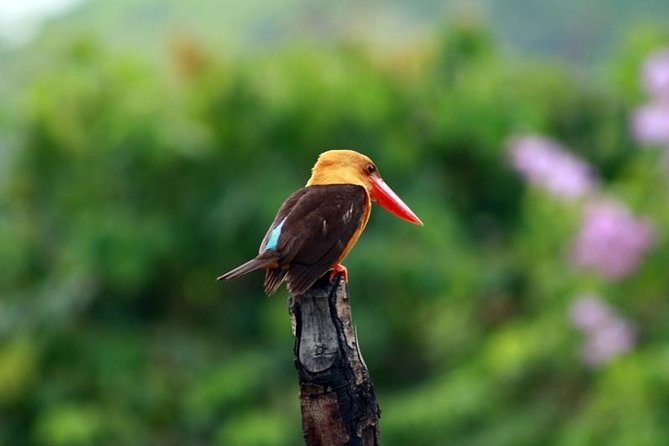
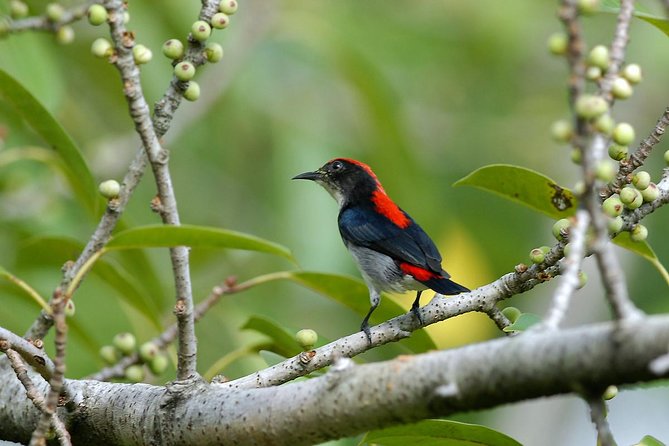
The bird list can change from one outing to the next, but the reported sightings give you a good idea of the possibilities. Kingfishers are a strong target. One outing produced four kingfishers, including a common kingfisher carrying a fish, which is the sort of brief action that makes a sighting memorable.
Hornbills are another major reason to book. Great hornbills and pied hornbills have been seen, and the great hornbill is often the highlight for first-time visitors. These birds can be difficult to photograph because they may sit at a distance, but seeing one in the forest is still a fine reward.
You might also find mountain hawk-eagles, egrets, pond herons, whistling ducks, and other migratory birds. Eagles can provide a strong visual moment in open country, while the smaller birds demand more attention. Monkeys have also been seen, although this is not a monkey tour and they should be treated as an extra sighting.
The exact number of species is never guaranteed. One outing recorded 23 different birds, while other trips have focused on a smaller set of especially good sightings. If you have a target bird list, send it to the operator in advance. The guide will try to work toward your targets, but the company makes no promise that every bird will appear.
Why the guide matters so much
A guide is not just transportation and bird names on this trip. The best part of the service is the guide’s ability to notice movement, shape, and sound before you do.
Sham has explained why mangroves matter and helped identify wildlife beyond birds, including a mangrove viper and eagles. Afie has been praised for finding hornbills and kingfishers, explaining where to look, and making binoculars available to the group. Ikram and the driver have also been described as careful and helpful, with attention given to local plants and the terrain.
The names matter because this is a guide-led experience rather than a self-guided stop at a viewing platform. Your guide can tell you to look under a branch, scan a particular tree, or wait for a bird to shift position. That turns a distant speck into something you can identify and remember.
The English-speaking guide also helps families and mixed-experience groups. A serious birder can discuss target species, while a beginner can ask basic questions without needing to know birding terms. Still, the quality of any wildlife outing depends on the guide assigned that day, and sightings will always vary.
Same hide, a different set of birds:
- Cape of Good Hope & Boulder Penguins Full-Day Tour from Cape Town
★ 5.0 · 2,347 reviews - From Melbourne: Penguin Parade, Koalas & Kangaroos
★ 4.5 · 1,932 reviews - Table Mountain, Penguins & Cape Point Small Group Tour Cape Town
★ 4.5 · 1,797 reviews - Cape Town Tour: Table Mountain, Penguins & Cape Point+Pickup
★ 4.7 · 1,671 reviews
Binoculars, scopes, and photography
Binoculars are included, and a scope is available for the tour. You are advised to bring your own binoculars if you have them, which is sensible if you prefer familiar equipment or want to share less. Bottled water is also included.
The optical gear is important because many birds may be high in trees or across open ground. You may see a bird clearly through the scope even when it is too distant for a useful phone photograph. That difference is worth understanding before you book.
Photography is possible, but the outing is not designed as a guaranteed close-up photo safari. Some birds will be far away, and forest light can be difficult. A common kingfisher with a fish or a clearly visible hornbill would be an excellent result, but you should not judge the tour only by the number of sharp images you bring home.
If photographs are important to you, carry the equipment you already know how to use and keep expectations realistic. The guide’s first duty is to locate and identify birds, not to position every person for a perfect shot. You will get better value if you enjoy the sighting itself as much as the picture.
Morning or afternoon, and the four-hour pace
The experience offers a choice of morning or afternoon departure, although the listed start time is 7:30 am. Confirm your chosen departure with the operator before the day of the trip.
Morning birding can suit people who want to start early and spend the rest of the day on another Langkawi activity. The afternoon option may work better if you dislike early starts or have a busy morning. The most suitable choice depends on your schedule, but the tour remains about four hours either way.
Four hours is enough time to visit more than one habitat without turning the outing into a full-day commitment. It also means the pace can feel long for people who are not interested in birds. One of the weaker experiences came from a participant who found the extended binocular viewing too slow, despite seeing many birds.
I would book this only if you are comfortable with pauses. Bring patience, watch the guide’s pointing hand, and accept that some of the best moments may involve a bird sitting still in a distant tree.
What to wear and how demanding it is
The tour requires a moderate level of physical fitness. The information provided does not describe a technical hike, but you should expect some walking in natural surroundings and be ready to stand while scanning for birds.
Wear long sleeves, long pants, and walking shoes. A hat and strong sun protection are sensible. Earth colors such as green, brown, or black are recommended, while bright red, yellow, and white clothing should be avoided.
These suggestions are practical rather than fussy. Long clothing gives you more protection outdoors, and muted colors are less distracting when you are trying to watch wildlife. Carrying a personal water bottle may also be useful, although bottled water is supplied.
Rain is possible. One group continued in wet conditions and still saw migratory and smaller birds, but bad weather can also force a cancellation or change of date. If the operator cancels because of poor weather, you can choose another date or receive a full refund.
Ethical birdwatching without tricks
JungleWalla follows BirdLife International guidelines for responsible bird tourism. The guides do not feed birds, use bait, or play bird calls to draw them closer.
That policy means you may not get the most convenient photograph, but it protects the behavior of the birds and keeps the experience honest. You are seeing wildlife where it chooses to be, not wildlife pulled into position for the group.
For me, this is one of the strongest reasons to choose the tour. A distant great hornbill found naturally is more meaningful than a close bird that has been lured by sound or food. It also teaches children and first-time birders that good wildlife watching depends on respect and restraint.
Is the $82 price good value?
At $82 per person, the tour is not the cheapest way to spend four hours in Langkawi. The value comes from the combined service: hotel pickup and return, an English-speaking nature guide, binoculars, a scope, and bottled water.
You are also paying for access to local knowledge. Without a guide, you could visit natural areas and see nothing, or overlook birds that are plainly visible to an experienced spotter. If you have a target list or a serious interest in birds, that guidance can justify the price.
For casual sightseers, the calculation is different. You may enjoy the scenery, monkeys, eagles, or a hornbill, but four hours of careful searching could feel too specialized. Families with children should consider the child’s patience before booking.
The group maximum is eight people, which helps the price feel more reasonable than a large coach excursion. A minimum of two people per booking applies, so solo visitors should check arrangements before paying. The tour has been rated very highly overall, with 97 percent recommending it and a 4.9 rating from 116 reviews, but those numbers should not replace an honest look at your own interests.
Who should book this experience?
I would recommend it most strongly to:
- Birders who want local help finding hornbills, kingfishers, eagles, and waterbirds
- Photographers who understand that wildlife images may be distant
- Families with children who enjoy nature and can wait quietly
- Visitors who want a small-group outing away from the beach
- Anyone interested in mangroves, plants, and the link between habitat and wildlife
I would think twice if you want a fast-moving attraction, a guaranteed list of species, or constant close views. You may still enjoy the setting, but the birding pace could test you.
Book at least 24 hours ahead if your plans might change, since cancellations made less than 24 hours before the start are not refunded. Confirmation is provided at booking, and you should contact JungleWalla before the tour if you have a target bird or need to clear up pickup details.
Should you book the Langkawi birdwatching tour?
Book it if you want a focused nature experience led by someone who can turn distant movement into a real bird sighting. The best rewards are likely to be the great hornbill, pied hornbill, kingfishers, mountain hawk-eagle, or an unexpected moment such as an eagle overhead or a kingfisher with a fish.
Skip it if you want a relaxed scenic drive with only occasional wildlife stops. This tour asks you to look carefully, wait, and accept that some birds will remain far away.
For the right person, the combination of hotel transport, optics, ethical practices, and a small group makes $82 a fair price. Bring patience, wear practical clothes, and let the guide do the hard work of finding the bird.
FAQ
How long is the Langkawi birdwatching tour?
The tour lasts approximately four hours.
What time does the tour start?
The listed start time is 7:30 am. A choice of morning or afternoon departure is offered, so confirm your selected time with the operator.
Is hotel pickup included?
Yes. Return transfers from hotels in Langkawi are included.
What birds might I see?
Possible sightings include whistling ducks, egrets, herons, pond herons, kingfishers, great hornbills, pied hornbills, mountain hawk-eagles, eagles, and migratory birds. Sightings are not guaranteed.
Are binoculars provided?
Yes. Binoculars are included, and a scope is also available. You are advised to bring your own binoculars if you have them.
Is food included?
No. Food and drinks are not included, although bottled water is provided.
How many people can join the tour?
The maximum group size is eight people. A minimum of two people per booking is required.
What should I wear?
Wear long sleeves, long pants, walking shoes, and a hat. Good sun protection is recommended, along with earth colors such as green, brown, or black. Bright colors such as red, yellow, and white should be avoided.
What happens if the weather is bad?
The tour requires good weather. If it is canceled because of poor weather, you will be offered another date or a full refund. You can cancel for a full refund if you do so at least 24 hours before the experience starts.
Newest birding reviews around the world
- Cocora Valley: Route of the Hummingbirds + breakfast & lunch★ 4.9 · 6 reviews
- Bird Watching Tours in Samarkand★ 3.6 · 3 reviews
- Birdwatching in Guatapé with Around 400 Bird Species★ 5.0 · 2 reviews
- Birding Medellin with expert bird-watcher (Private)★ 5.0 · 17 reviews
- Best of Cape Private Tour Cape Point+Penguins+Table Mountain★ 5.0 · 2 reviews
- Barbados: Bird Watching Experience★ 5.0 · 2 reviews
- Big Island: Native Bird Watching & Hiking Tour★ 5.0 · 5 reviews
- Bird Creek: Chugach State Park ATV Nature Tour & Hike★ 5.0 · 2 reviews
Malaysia Birdwatching Tours, side by side.


Fraser’s Hill Bird-Watching & Nature Sightseeing Tour from Kuala Lumpur
Read our review →
Bird Park & Butterfly Farm Nature Include All Entrance Tour From Kuala Lumpur
Read our review →Lists this trip turns up in