
REVIEW · CAMBODIA
Beyond The Oudong Temple and Birdwatching in Phnom Penh
The best thing about this Phnom Penh birdwatching day trip is its range. In seven hours, you move from wet fields and rice country to the Tonle Sap riverside, a floating village, and the old capital at Oudong. The birds are the main event, but daily Cambodian life gives the outing its real character.
I like the small group limit of eight, which makes it easier to share sightings with the guide. I also like the useful inclusions: transport, water, fruit, coffee, breakfast, lunch, and binoculars. The early start is the main drawback, and the published times vary between 5:30 and 6:00 am, so confirm your pickup time before bed.
Key points to know before booking
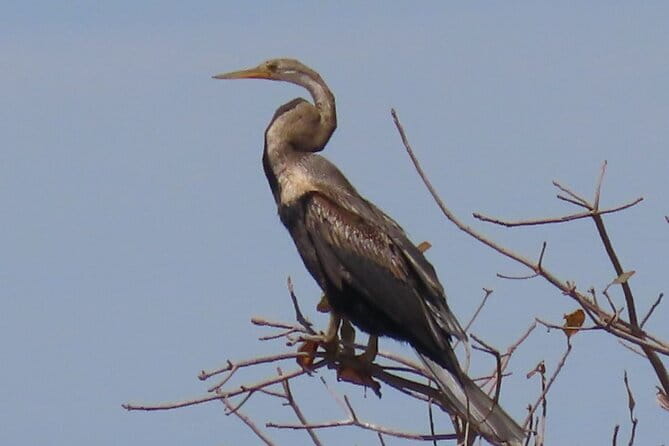
- Bird-rich route: Look for Cambodian tailorbirds, Oriental Darters, herons, kingfishers, bitterns, Asian Openbills, and migratory birds.
- More than birding: The route includes the Tonle Sap riverside, rice fields, a floating village, and Oudong Temple.
- Small-group setting: A maximum of eight people allows for a calmer pace and more chances to ask questions.
- Full-day value: The $110 price includes hotel transport, a birding guide, drinks, fruit, two meals, and binoculars.
- Very early departure: Pickup or the Independence Monument meeting point begins around 5:30 to 6:00 am.
- Guide quality matters: Simon and Mr Thong are named guides connected with this experience, with strengths in spotting birds, identifying calls, and explaining local life.
Why this outing is different from a standard Phnom Penh day trip
Most Phnom Penh excursions focus on museums, markets, memorials, or the Royal Palace. This one points you toward the wetlands and rural edges beyond the city. That change of pace matters. You get away from traffic and buildings without giving up the chance to learn about Cambodian life.
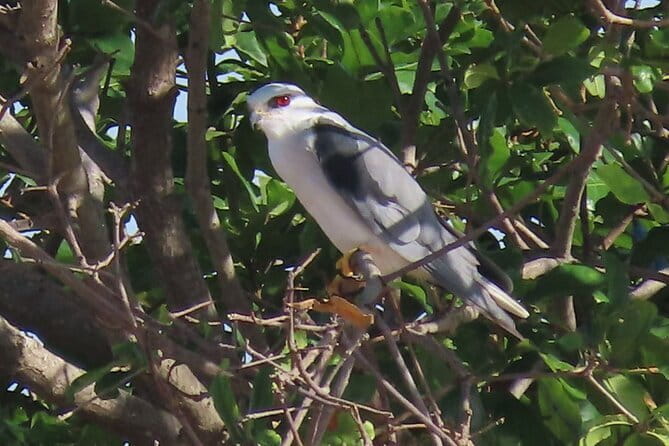
The bird list is unusually broad for one day. You might see small birds such as the plaited prinia, sunbirds, tailorbirds, and bee-eaters. Wetland areas can produce Little Grebes, egrets, herons, Black-winged Stilts, Common Greenshanks, and Oriental Darters. Raptors such as the Black-shouldered Kite and Black-winged Kite may appear above the fields.
The trip also includes a cultural side that many birding outings leave out. You pass a Muslim community, rice fields, and riverside settlements. A visit to a floating village gives you a closer look at life shaped by the Tonle Sap River. Then Oudong adds a historical stop, so the day does not feel like seven hours of standing beside ponds with binoculars.
A few more birding trips around the world worth a look
- Penguin Parade, & Wildlife Encounters Eco Tour from Melbourne
★ 5.0 · 3,774 reviews - Cape Town: Cape of Good Hope & Penguins Day Tour with Pickup
★ 4.7 · 3,362 reviews - Cape Point and Boulder’s Penguins Full Day Tour
★ 5.0 · 3,118 reviews
The early start and ride beyond Phnom Penh
The day begins before most of Phnom Penh is fully awake. Pickup is offered, or you can meet at the Independence Monument. The listed start time is 6:00 am, while the detailed schedule says 5:30 am, so this is one detail I would settle in advance.
The first drive takes about 30 minutes. That short transfer gets you toward countryside and water habitats, where the first birds may include Little Bee-eaters, Little Grebes, Great Cuckoos, Plaited Prinias, Little Egrets, Blue-tailed Bee-eaters, and kingfishers.
This first stop helps set expectations. Birdwatching is not a parade of guaranteed sightings. You may see a bird clearly, hear one in the reeds, or spend time waiting for movement. A local guide can make that waiting worthwhile by spotting birds you would miss on your own.
Simon is one guide associated with the experience. His strengths include finding birds quickly and explaining what you are seeing, even though he is relatively new to guiding. Mr Thong is another named guide, noted for organizing the day, knowing the terrain, and identifying birds by both sight and song. Your actual guide may vary, but these details show the kind of help you need here: sharp eyes, local familiarity, and patience.
Birding beside rice fields and the Tonle Sap
After the first birding area, the route follows the Tonle Sap riverside. You pass rice fields and a Muslim community before stopping at another viewing area. This part of the day brings together birds and human activity in a way that feels more grounded than a fenced nature park.
Possible sightings include Yellow Bitterns, Black-winged Kites, sunbirds, Indian Rollers, Oriental Darters, and Asian Yellow Weavers. The mix is important. You are not limited to one type of habitat, so the day can produce both water birds and species that live around grass, trees, and cultivated land.
The Tonle Sap is central to Cambodian life, and the guide also explains how changes in water and land affect local people. That context adds weight to the bird list. You begin to see the river not simply as a place to spot a darter or heron, but as a working environment connected to food, homes, transport, and seasonal change.
I would bring light clothing, sun protection, and comfortable shoes. The supplied information confirms transport and refreshments, but it does not promise shaded viewing at every stop. You should expect an outdoor morning and changing conditions rather than a polished visitor center.
Coffee, fruit, and the best wetland viewing

A coffee and fruit break takes place while you look over grass fields. This is a small detail, but it makes a difference. Early birding requires quiet attention, and a simple breakfast pause gives you time to reset without leaving the route.
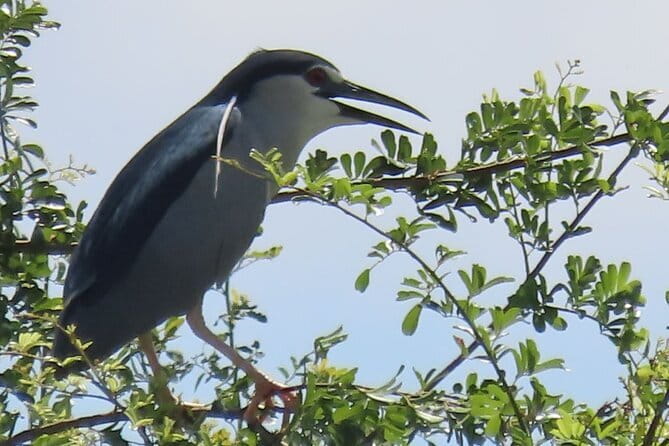
This stretch may be the strongest part of the morning for wetland birds. Watch for Black-crowned Night-herons, pond herons, Little Egrets, Great Egrets, Pied Kingfishers, Common Kingfishers, Cambodian Tailorbirds, Common Greenshanks, Black-winged Stilts, and Grey Herons.
The supplied information names both Java Pond Herons and Mayan Pond Herons in different places, so the exact species list can vary. The useful point is that you are visiting habitat where several heron types and wading birds may appear close together.
Birders who care about calls should pay close attention here. Mr Thong is noted for identifying birds by song as well as sight. That can make the experience more rewarding than simply checking species off a list. You might hear a bird before you see it, then learn what clues to watch for.
Binoculars are included, although you are encouraged to bring your own if you have them. I would do so if birding is a serious interest, since familiar equipment is often easier to use. Still, the included pair removes a major barrier for casual birdwatchers.
Same hide, a different set of birds:
- Cape of Good Hope & Boulder Penguins Full-Day Tour from Cape Town
★ 5.0 · 2,347 reviews - From Melbourne: Penguin Parade, Koalas & Kangaroos
★ 4.5 · 1,932 reviews - Table Mountain, Penguins & Cape Point Small Group Tour Cape Town
★ 4.5 · 1,797 reviews - Cape Town Tour: Table Mountain, Penguins & Cape Point+Pickup
★ 4.7 · 1,671 reviews
A floating village on the Tonle Sap
The floating village adds a human stop to the middle of the day. Instead of viewing the Tonle Sap only from a roadside or birding point, you get a closer look at a community built around the river.
The information provided does not specify the village name, boat arrangement, or exact length of this visit. That means you should treat it as a planned stop within the route, not as a separately described boat tour with a guaranteed schedule. Its value lies in seeing how riverside life fits with the birds and wetlands around it.
This is also where the guide’s local explanations matter. One of the strengths associated with the guiding is the ability to connect changing natural conditions with Cambodian communities. You will get more from the stop if you ask questions about the river, homes, fishing, and seasonal water levels.
Do not expect the same quiet as at a remote birding site. A floating village is a lived-in place, not a wildlife enclosure. That can mean more activity and less controlled viewing, but it also makes the day feel more honest and less staged.
Lunch and the road to Oudong
Lunch is included, along with breakfast, coffee, fruit, and drinking water. The exact dishes are not specified, though one guide is described as arranging two typical meals shared during the day. That suggests a local food experience rather than a packaged meal designed only for convenience.
Food matters on this schedule. You start early, spend hours outdoors, and continue into the afternoon. Having meals arranged means you do not lose valuable time searching for a restaurant between birding stops. It also keeps the group together.
After lunch, the route continues to Oudong. This former capital gives the day a clear second theme. You are no longer looking only at birds and river life. You are also visiting one of the area’s major historic sites.
Birdwatching and history at Oudong Temple
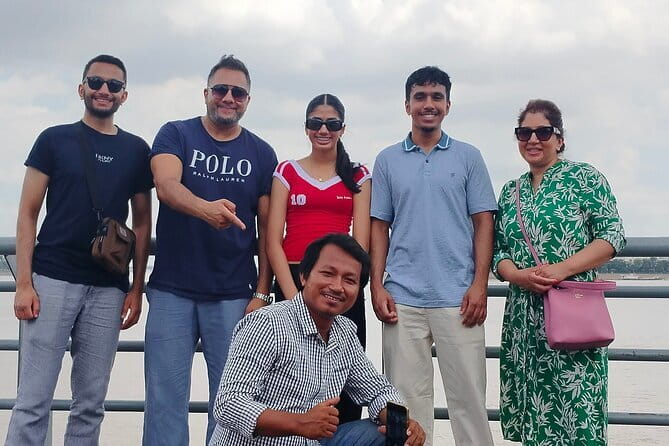
Oudong Temple is the final named stop. The site adds architecture, religious history, and views over the surrounding countryside to a day that began with wetlands and small birds.
Birding at Oudong can feel different from birding near open water. Temples and surrounding grounds may offer trees, open areas, and edges where birds move between habitats. You might see familiar species from earlier in the day, or add new ones to your list.
The historic setting gives you a chance to slow down. A good guide can point out the old capital’s importance while still keeping an eye out for birds. That combination is one of the strongest reasons to choose this outing over a strictly specialized birding trip.
There is a trade-off. If you want the largest possible number of birding hours, the temple visit reduces time spent at wetlands. If you prefer a day with variety, Oudong makes the schedule much more satisfying. I would choose this version if you want wildlife and culture in one outing, rather than a single-minded bird survey.
What $110 includes, and where the value lies

At $110 per person, this is not the cheapest way to leave Phnom Penh for a day. The value depends on how much of the included support you would otherwise need to arrange yourself.
The price covers:
- Hotel pickup and drop-off
- Round-trip vehicle support
- An English-speaking birding guide
- Purified drinking water
- Fresh fruit
- Morning coffee and breakfast
- Lunch
- Binoculars
- A small-group setting of no more than eight people
Transport alone can become complicated when several rural sites are involved. Add an early departure, a specialist guide, meals, and several stops, and the price becomes easier to understand. You are paying for access to a planned route and for someone who can identify birds that are easy to overlook.
Personal spending and tips are not included. The free cancellation policy allows you to cancel up to 24 hours before the start time for a full refund. Changes or cancellations inside that window are not accepted for a refund.
Who will enjoy this day most
I would recommend this experience to you if you like nature but also want a cultural setting. You do not need to be an expert birder. The list includes common and distinctive species, and a guide can help you notice birds you would likely miss alone.
It suits a first-time birdwatcher who wants structure. You get equipment, food, transport, and an English-speaking guide, so you do not have to solve the practical details yourself.
It also suits experienced birders who value local knowledge. The combination of calls, visual identification, wetlands, rice fields, riverside habitats, and temple grounds gives you more variety than a short city birding walk.
I would be more cautious if you dislike very early mornings, long outdoor hours, or an itinerary that keeps moving between several sites. The day begins around dawn and returns to Phnom Penh around 3:00 or 4:00 pm. It is a full outing, not a relaxed late-start excursion.
The tour is capped at eight people, which is a good size for sharing sightings. Still, birdwatching always involves some waiting and luck. No guide can promise every species on the list.
Practical details that matter
You can book with hotel pickup or meet at the Independence Monument. Confirm which option applies to you and verify the exact start time, since both 5:30 and 6:00 am appear in the schedule.
Most people can participate, and the meeting point is near public transportation. The experience has mobile ticketing and confirmation at booking. Group discounts are available, though the exact discount is not specified.
Bring your own binoculars if you have a preferred pair. Otherwise, a pair is supplied. You should also carry a phone or camera if you want to record sightings, though photography is not listed as a formal feature.
The tour operates with a maximum of eight people. That limit is especially useful during birding, when a large group can make it harder for everyone to hear the guide or look through binoculars.
Should you book the Oudong and birdwatching day?
Book it if you want wildlife, local life, and history in one day. The birding is the heart of the experience, but the floating village, Tonle Sap riverside, rice fields, and Oudong Temple keep the day varied.
The strongest reasons to go are the small group, local guide support, included meals, and access to several habitats beyond Phnom Penh. Simon and Mr Thong are associated with the experience, and their reported strengths in spotting birds, reading the terrain, and explaining local changes are exactly what this kind of outing needs.
Skip it if you want a late start or a tightly controlled wildlife tour with guaranteed sightings. For everyone else, the $110 price is reasonable when you count the vehicle, food, equipment, and specialist guiding. Confirm the pickup time, bring patience, and you will have a good chance of seeing a side of Cambodia that most city visitors miss.
FAQ
What time does the tour start?
The listed start time is 6:00 am, while the detailed schedule begins at 5:30 am. Confirm the exact pickup or meeting time when booking.
Where does the tour begin?
You can use the pickup service, or meet at the Independence Monument in Phnom Penh.
How long does the experience last?
The tour lasts about seven hours and normally returns to Phnom Penh around 3:00 or 4:00 pm.
What birds might I see?
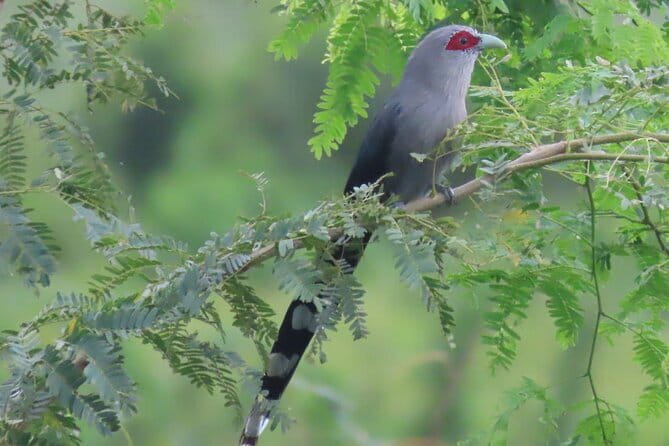
Possible sightings include Cambodian Tailorbirds, Black-crowned Night-herons, Oriental Darters, Black Drongos, Green-billed Malkohas, Asian Openbills, Lesser Whistling-ducks, Little Grebes, Cinnamon Bitterns, Grey Herons, Java Pond Herons, Black-shouldered Kites, kingfishers, bee-eaters, and migratory birds.
Are meals and drinks included?
Yes. The tour includes purified drinking water, fruit, morning coffee, breakfast, and lunch.
Is equipment provided?
Binoculars are provided, although you may bring your own pair if you have one. Round-trip vehicle support and an English-speaking birding guide are also included.
Newest birding reviews around the world
- Cocora Valley: Route of the Hummingbirds + breakfast & lunch★ 4.9 · 6 reviews
- Bird Watching Tours in Samarkand★ 3.6 · 3 reviews
- Birdwatching in Guatapé with Around 400 Bird Species★ 5.0 · 2 reviews
- Best of Cape Private Tour Cape Point+Penguins+Table Mountain★ 5.0 · 2 reviews
- Barbados: Bird Watching Experience★ 5.0 · 2 reviews
- Birding Medellin with expert bird-watcher (Private)★ 5.0 · 17 reviews
- Big Island: Native Bird Watching & Hiking Tour★ 5.0 · 5 reviews
- Bird Creek: Chugach State Park ATV Nature Tour & Hike★ 5.0 · 2 reviews
Cambodia Birdwatching Tours, side by side.
Prek Toal Birds Sanctuary and floating Village Private Day Tour
Read our review →Prek Toal Bird Sanctuary Day Trip from Siem Reap
Read our review →
Bird Watching at Tonle Sap Forest and Lotus Farm Siem Reap
Read our review →
Lists this trip turns up in