
REVIEW · SPAIN
Birdwatching in the Ebro Delta
The best part of this Ebro Delta tour is its mix of birdwatching and local insight. You do not simply stop at a wetland, point at a flamingo, and move on. You follow a guide around Les Olles lagoon, then travel by your own car along the coast toward Fangar Bay and Illa de Mar, learning how birds, rice farming, dunes, and water fit together.
I like the small group limit of 10 and the chance to see a less familiar side of Catalonia. Guides such as Pep and David explain the Delta clearly, and their talks can cover everything from imperial herons and ibises to the formation of the Delta and its environmental problems. The main drawback is practical: you must provide a car and a seat for the guide.
Key points
- Les Olles lagoon: The Natural Park’s smallest lagoon still supports mallards, egrets, kingfishers, stilts, and flamingos.
- Your own car: The guide travels with your group, so one participant must provide a seat.
- More than birds: Expect explanations about rice fields, dunes, plants, Delta formation, and conservation.
- Coastal route: The outing continues from L’Ampolla toward Fangar Bay and the fishing port of Illa de Mar.
- Small-group format: A maximum of 10 people allows for questions and a more personal pace.
- Flexible timing: The tour lasts about 2.5 hours, sometimes up to three, and runs in rain, sun, or wind.
Starting at Camping TAIGA l’Ampolla

You meet at the reception of Camping TAIGA l’Ampolla, near L’Ampolla in Catalonia. The supplied details also refer to Camping Ampolla Playa de L’Ampolla, so I would check the exact reception name and meeting instructions before setting off. That small bit of planning matters, especially if you are arriving by car and do not know the campground.
The tour begins with a local environmental educator. English, French, Spanish, and Catalan are available, which makes this a useful choice for mixed-language groups. The guide needs a place in your car, and the group then travels together in participants’ vehicles.
This arrangement keeps the price at $47 per person rather than adding a separate transport vehicle, but it changes the booking decision. If you are alone without a car, or your vehicle has no spare seat, this is not the right outing. If you are already driving around the Delta, the setup is simple and practical.
More Wetland and Lagoon Birding in the world:
- Faro: Eco-Friendly Ria Formosa Bird Watching in Solar Boat
★ 4.7 · 359 reviews - Faro: Ria Formosa Natural Park Segway Tour & Birdwatching
★ 4.9 · 180 reviews - Ria Formosa Natural Park Birdwatching Segway Tour from Faro
★ 5.0 · 164 reviews
Why Les Olles lagoon matters

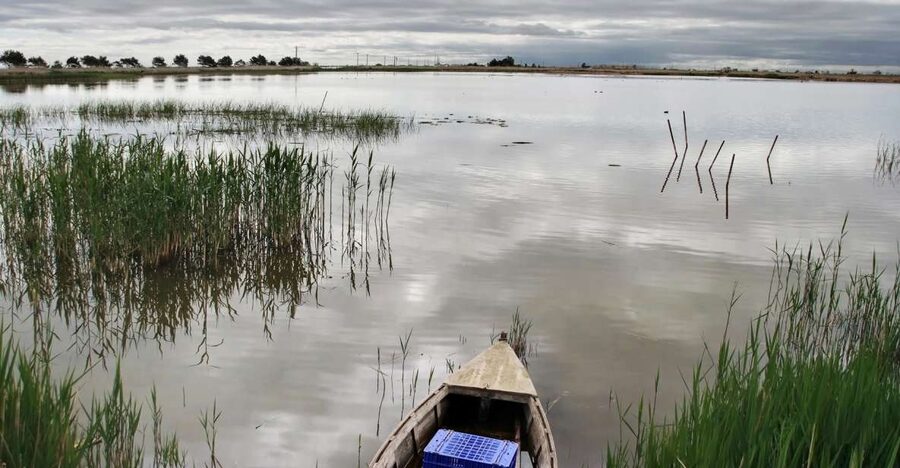
Les Olles is the smallest lagoon in the Ebro Delta Natural Park, but size is not the point. Its shallow wetland habitat supports a notable number of water birds, making it a useful place to begin. You walk with the guide around the lagoon and use the viewpoints placed along the shore.
The route can bring you close to familiar birds such as mallards and egrets, while kingfishers and stilts add variety. Flamingos are the visual prize for many people, and the open wetland makes them easier to appreciate than a quick roadside sighting.
I like this first section because it gives the tour a clear purpose. You are not racing from one photo stop to another. You have time to watch the birds, learn what you are seeing, and understand why a small lagoon can matter within a much larger wetland system.
The exact number of birds will depend on conditions. This is nature, not a stage show. Wind, rain, light, and the season all affect what appears from the viewpoints. The tour runs in all weather, so comfortable clothing and a willingness to accept changing conditions are part of the deal.
From bird names to the Delta’s working world
The guide does more than identify species. You also learn about the plants around the lagoon and the rice fields that surround the reserve. That wider context gives the birdwatching more meaning.
The Ebro Delta is both a natural area and a working place. Rice cultivation shapes the scenery and the water systems, and the guide explains how the fields connect with the surrounding wetlands. You can also hear about the formation of the Delta and the pressure facing its ecosystems.
That is where guides such as Pep and David add real value. Pep has been praised for explaining the Delta’s ecology, wildlife, history, and photography in a clear, friendly way. David has explained the region in French and discussed its environmental problems. The guide’s role is not limited to saying that is a flamingo. You get a better sense of why the bird is there and what can put this habitat at risk.
For me, this is the difference between a basic wildlife outing and a useful nature tour. Even if the birds are quiet on your day, the explanations about rice fields, plants, dunes, and conservation give the drive a purpose.
Following the coast toward Fangar Bay
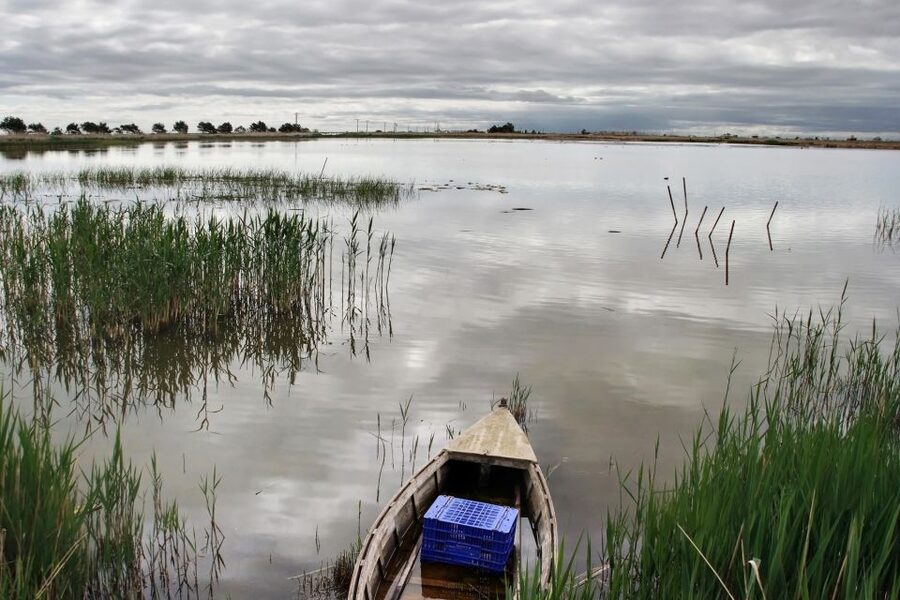
After Les Olles, the route continues along the coastline from L’Ampolla toward Fangar Bay and the fishing port of Illa de Mar. This is not a single walking trail with every sight packed into one small area. It is a car-based exploration with stops along the way.
Fangar Bay adds a wider view of the Delta’s coastal side. The tour description places the birdwatching experience along the full coastal journey, so you get a sense of how lagoons, shoreline, fields, and fishing areas connect.
The route is especially useful if you are new to the Ebro Delta. The Delta can feel spread out, and the most interesting viewpoints are not always obvious when you are driving alone. A local guide can take you to places you might otherwise pass without stopping.
Do not expect a polished sightseeing circuit with large signs and fixed attractions. The appeal is the combination of local knowledge and simple transport. You follow the guide, stop at selected points, and use the time to observe and ask questions.
A few more birding trips around the world worth a look
- Penguin Parade, & Wildlife Encounters Eco Tour from Melbourne
★ 5.0 · 3,774 reviews - Cape Town: Cape of Good Hope & Penguins Day Tour with Pickup
★ 4.7 · 3,362 reviews - Cape Point and Boulder’s Penguins Full Day Tour
★ 5.0 · 3,118 reviews - Cape of Good Hope & Boulder Penguins Full-Day Tour from Cape Town
★ 5.0 · 2,347 reviews
The birds you might see
The core sightings include mallards, egrets, kingfishers, stilts, and flamingos. Other birds seen on outings have included imperial herons, night herons, ibises, cormorants, laughing gulls, and small birds of prey.
That list shows the range of habitats involved. You are not limited to one kind of water bird. The lagoons, coast, rice fields, and nearby natural areas support different species, so the route has more variety than a single lookout.
Flamingos are likely to draw your eye first, but I would not treat them as the only reason to book. A kingfisher can be harder to spot, while a heron may reward patient watching. The fun is partly in learning to notice movement and shape rather than waiting only for the largest bird.
Binoculars are worth asking about before departure. Pep has supplied binoculars to participants on an outing, which made it easier to see details, especially on distant flamingos. Since binoculars are not listed as an official inclusion, bring your own if you have them or confirm availability in advance.
What the small group changes
The group is limited to 10 participants. That is large enough to create a social outing but small enough for the guide to answer questions without turning the experience into a lecture from a distance.
A small group also works better at viewpoints. You can hear explanations, share sightings, and ask about a bird or plant while it is still in view. If you enjoy quiet observation, the group size is still worth considering, since you will not have the whole lagoon to yourself.
The guide’s personality matters here. Past outings have featured Pep, David, and other local guides, with a focus on clear explanations and a friendly manner. The strongest part of the experience is likely to be the guide’s ability to connect individual sightings with the Delta’s larger ecological story.
Is $47 good value?
At $47 per person, the price is fair if you want interpretation rather than only transport. You are paying for a local guide, access to selected viewpoints, help identifying birds, and a structured route through an area that can be confusing to explore on your own.
The value is better if you are already traveling by car. Your vehicle is required, and the guide needs a seat, so the price does not include a tour van or dedicated transport. If you hoped to sit back while someone else drove, this setup may feel less convenient.
The tour lasts about 2.5 hours, with the full outing sometimes taking up to three hours. That makes it easy to fit into a day of exploring the Delta. It is long enough to visit several settings without taking over your entire schedule.
Free cancellation is available up to 24 hours before the tour, and you can reserve now and pay later. Those terms help if your Delta plans depend on weather, though remember that the tour itself runs in rain, sunshine, and wind.
Weather, clothing, and comfort
Wear comfortable clothes. This is a modest requirement, but it matters because you combine time in the car with walking around wetland viewpoints and coastal areas.
The tour is not cancelled simply because the sky changes. Wind can affect birdwatching, visibility, and comfort, while rain may make the walking sections less pleasant. Bring suitable layers and be ready for a more exposed setting rather than assuming a warm, sheltered outing.
The experience is not suitable for wheelchair users. The route includes walking around a lagoon and stops in natural areas, and the provided information does not promise accessible paths or facilities.
Alcoholic drinks are not allowed in the vehicle, and alcohol, drugs, explosives, and nudity are prohibited. These rules are basic but worth noting because participants share a car with the guide and possibly other members of the group.
Who should book this Delta outing?
I would choose this tour if you want to understand the Ebro Delta while seeing its birds. It suits first-time visitors who would rather have a local guide point out the best areas than spend half a day guessing where to stop.
It also works for people who are interested in nature but are not serious birdwatchers. The tour includes rice fields, vegetation, dunes, coastal scenery, Delta formation, and conservation, so you do not need to know bird names before you arrive.
Families and mixed-interest groups may find the format useful if everyone can manage the walking and has access to a suitable car. The small group and multilingual guide options make it easier to keep the outing personal.
I would hesitate if you want a long, specialist birding session with guaranteed rare species. The tour is fairly short, the route is shared by car, and wildlife sightings cannot be promised. It is better understood as a guided introduction to the Delta’s habitats, with birdwatching as the main thread.
Should you book Birdwatching in the Ebro Delta?
Book it if you have a car, want a small-group outing, and value explanation as much as photography. The most useful part is the connection between the birds and the place: lagoons, rice fields, plants, dunes, coast, and the challenges facing the Delta.
Before booking, confirm the exact meeting point at Camping TAIGA l’Ampolla, check that your vehicle has a seat for the guide, and ask about binoculars. With those details settled, $47 buys a focused introduction to one of Catalonia’s most distinctive natural areas.
FAQ
Where does the birdwatching tour meet?
The meeting point is at the reception of Camping TAIGA l’Ampolla. The details also refer to Camping Ampolla Playa de L’Ampolla, so confirm the precise reception location before arrival.
How long does the tour last?
The stated duration is 2.5 hours. The full route may take approximately 2.5 to 3 hours.
What languages does the guide speak?
Guides are available in English, French, Spanish, and Catalan.
Do I need to provide a car?
Yes. The tour takes place using participants’ own cars, and the guide needs a place in your vehicle.
What places does the tour visit?
The route includes Les Olles lagoon, Fangar Bay, the coast from L’Ampolla, and the fishing port of Illa de Mar.
Which birds might I see?
Possible sightings include mallards, egrets, kingfishers, stilts, flamingos, imperial herons, night herons, ibises, cormorants, laughing gulls, and small birds of prey.
Does the tour run in bad weather?
Yes. The activity takes place in rain, sunshine, or wind.
Is the tour suitable for wheelchair users?
No. The tour is not suitable for wheelchair users.
Can I cancel the booking?
You can cancel up to 24 hours in advance for a full refund. You can also reserve now and pay later.
Newest birding reviews around the world
- Walvis Bay Shore Excursion: Flamingos, Dune 7, Swakopmund★ 5.0 · 3 reviews
- VIP falconry taster session★ 5.0 · 2 reviews
- Vila Franca do Campo: Marine Life & Bird Watching & Islet Tour★ 4.4 · 9 reviews
- York: Entry to York bird of prey centre★ 5.0 · 7 reviews
- Ushuaia: Gable Island and Penguin Colony with Lunch★ 4.8 · 2 reviews
- Vestmannaeyjar: Puffin, Island, and Volcano Boat Tour★ 4.4 · 7 reviews
- Visit to Madeira Bird Island★ 4.6 · 22 reviews
- Vermont Nature Trail and Bird Watching Tour★ 5.0 · 2 reviews
Wetland & Lagoon Birding, side by side.
Eco-Friendly Ria Formosa Bird Watching in Solar Boat
Read our review →
Ria Formosa Natural Park Segway Tour & Birdwatching
Read our review →
Ria Formosa Natural Park Birdwatching Segway Tour from Faro
Read our review →
Two-Hour Everglades Dolphin, Manatee and Birding Boat Tour
Read our review →
Tagus Estuary Nature Reserve Birdwatching Boat Tour
Read our review →
Wetlands Safari Eco-Cruise in Cape May (Osprey Birding By Boat)
Read our review →
Everglades Birding, Dolphin and Wildlife Boat Tour (2 hours)
Read our review →
Desembocada and Ameca River Bird Paradise (Wetland and Tropical birds in PV)
Read our review →Lists this trip turns up in