REVIEW · ICELAND
Reykjavik: 1-Hour Puffin Watching Tour
Puffins are the stars here, but the real pleasure is seeing them where they belong: perched near island burrows, bobbing on the water, or zipping past the boat in flight. I like the free onboard binoculars, which matter because puffins are smaller than most people expect, and I like the calm, low-impact approach to the nesting islands. The guide may even cut the engines so you hear the birds.
I also like the warm overalls, raincoats, and blankets. Iceland’s harbor weather can turn cold and wet in a hurry. The main catch is distance: you get close to the islands, but not necessarily close enough for dramatic naked-eye photos. Tides and weather affect the view, so bring patience and allow more time than the one-hour label suggests.
Key points
- Puffin islands: The boat heads for Akurey, Engey, or Lundey, depending on tides and weather.
- Binoculars included: Borrow a pair onboard, an important help for seeing birds near their burrows.
- More than puffins: Look for eider ducks, Arctic terns, guillemots, cormorants, fulmars, geese, and oystercatchers.
- A gentle wildlife approach: The boat stays offshore and may shut down its engines near the birds.
- Flexible timing: The advertised one-hour trip can run longer, so do not schedule a tight connection afterward.
- Harbor convenience: Check in at Ægisgarður 5, about a five-minute walk from central Reykjavik.
What this Reykjavik puffin cruise is really like
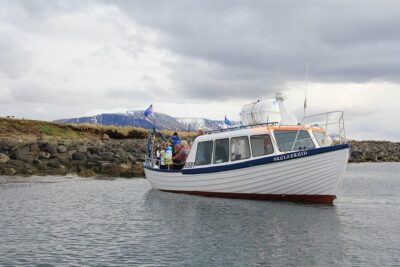
This is a short sea trip rather than a full-day wildlife expedition. You leave Reykjavik’s Old Harbour, spend about 15 minutes reaching the bird islands, watch the colonies for roughly 30 minutes, then return in about 15 minutes. The exact island may be Akurey, Engey, or Lundey, with the captain choosing according to conditions.
The experience works best when you know what you are buying. You are not stepping ashore, walking among puffins, or filling a camera frame with a bird at arm’s length. You are watching a protected breeding site from a boat, using binoculars to pick out birds on the rocky shore and in the air.
That distance is part of the point. Puffins and other seabirds are left in peace, while you still get a clear look at their habitat. On a calm day, the boat can circle a useful section of the island and give people room to move from side to side for a better view.
More Puffin Watching Tours in Iceland
- Reykjavik: Puffin Watching Boat Tour
★ 4.6 · 1,052 reviews - Puffin Cruise with Expert Tour Guide from Reykjavik
★ 4.5 · 636 reviews - Reykjavik: Whales and Puffins Express Cruise Combo Tour
★ 4.4 · 552 reviews
Leaving Ægisgarður 5 from Reykjavik’s harbor
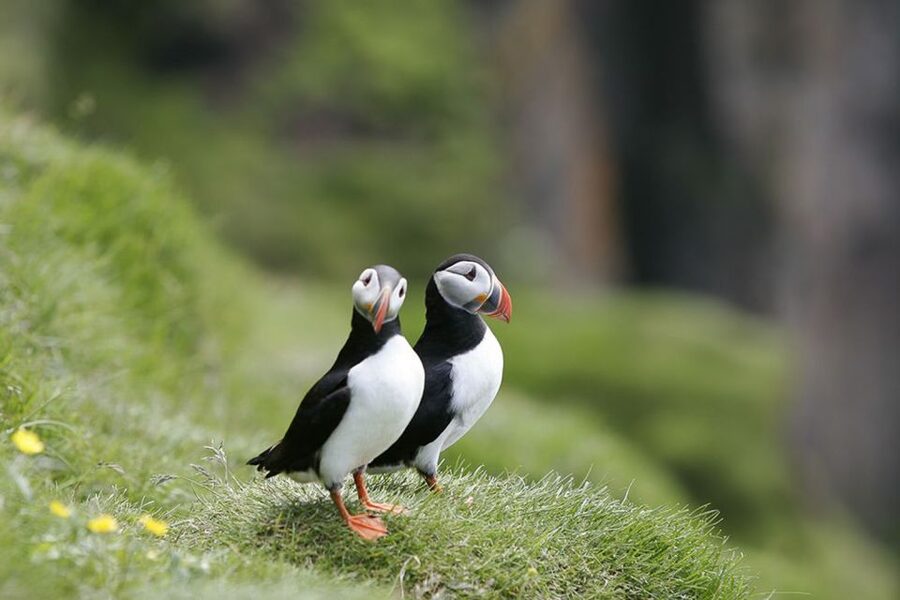
Check in at Elding’s ticket office at Ægisgarður 5, in the harbor area and no more than about 300 meters from central Reykjavik. That is roughly a five-minute walk, though parking can be difficult, so I would arrive early if you are driving.
The harbor has a small bonus before departure. You can look around the Whale Watching Centre, watch short videos, and browse skeletons, information boards, and gifts. It gives you something to do if you arrive ahead of time, and it helps put the boat trip in context.
Do not bring high heels, large bags, or luggage. Wear clothing suited to Icelandic weather, even if Reykjavik looks mild when you leave your hotel. The boat provides warm overalls, raincoats, and blankets, but your own warm layers still make the trip more comfortable.
There is an indoor area onboard, and refreshments are available to buy. Seaman’s coffee is mentioned as a warming option, but refreshments are not included in the ticket price.
The first 15 minutes across Faxaflói
The outward ride is short, but do not treat it as wasted time. You get harbor views of Reykjavik, open-water air, and a chance to settle into the boat before the birdwatching begins. If the sea is choppy, this is also when you learn how your stomach feels.
Motion sickness tablets have been available on some departures, but I would not rely on that. If you are prone to seasickness, dress warmly, watch the horizon, and choose a steady place onboard. The tour is compact, yet even a short ride can feel long in rough water.
Boats and group sizes can vary. The experience has been described as comfortable, with enough room to move around and find an unobstructed view. Still, the best place is not guaranteed, especially if you wait until the last moment to board.
Reaching Akurey, Engey, or Lundey
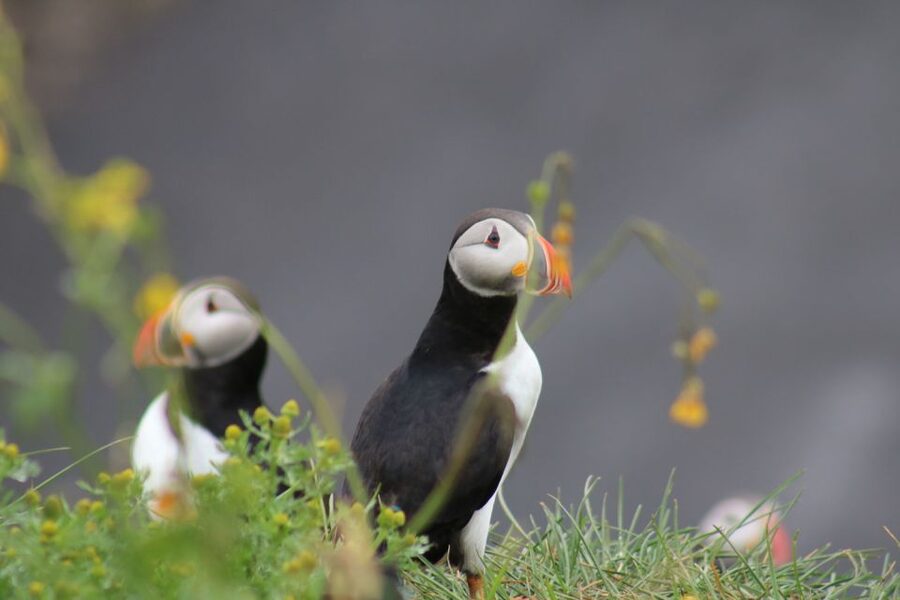
These small islands are known for nesting seabirds. Their shores are rocky, and the puffins gather near burrows and along the waterline. You remain on the boat while the captain works toward the best viewing angle.
The selected island depends on tides and weather. That choice matters more than it may sound. A low tide can keep the boat farther from the shore, while high tide may allow a closer approach. If seeing puffins near their burrows is your main goal, ask at check-in which departure times coincide with higher tide.
The captain’s handling makes a difference here. The boat may circle the island, move slowly, or switch off its engines so you can hear the bird calls. This is one of the best parts of the trip. A quiet boat lets you notice the colony as a living place rather than just a row of dots through glass.
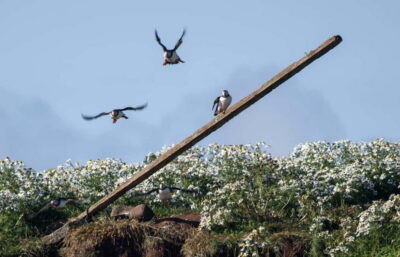
You might see puffins standing near their burrows, floating offshore, flying in from the sea, or passing close to the boat. The birds are often easier to spot in flight than expected, since their wingbeats are quick and their black-and-white bodies flash against the water.
More Puffin Watching Tours in Reykjavik
- Reykjavik: Whale and Puffin Watching RIB Boat Tour
★ 4.7 · 293 reviews - Reykjavik: Puffin Watching Tour
★ 4.8 · 277 reviews - Classic Puffin Watching Cruise from Downtown Reykjavík
★ 4.5 · 276 reviews - Premium Small-Group Puffin & Bird Watching tour from Reykjavík
★ 5.0 · 124 reviews
Why the binoculars matter
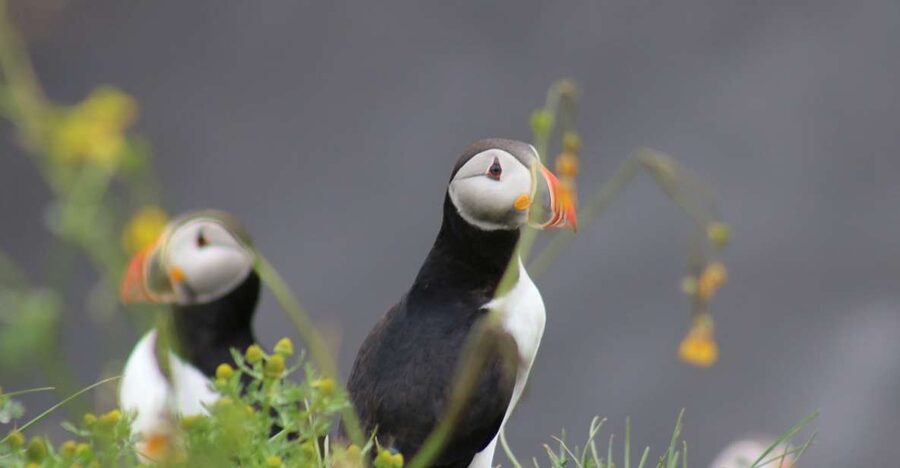
Puffins look larger in photographs than they do from a boat. In reality, they are small birds, and the distance needed to protect the colony makes binoculars essential for a satisfying view.
Elding provides binoculars to borrow onboard. That is a real part of the ticket’s value, not a minor extra. Without them, you may see plenty of movement but struggle to make out a puffin’s colorful bill or the shape of a bird beside its burrow.
Bring your own binoculars if you have a good pair, but the loan equipment helps people who are packing light. A few people have also managed phone photos by holding a phone to the binocular eyepiece. That takes patience, but it can produce a better record than a standard phone camera aimed across the water.
A serious wildlife photographer should temper expectations. The boat can get close enough for memorable views, but not always for sharp, frame-filling portraits. Cloud, drizzle, glare, and the boat’s movement add to the challenge. Use the camera for atmosphere, then use the binoculars for the best look at the birds.
Puffins are only part of the show
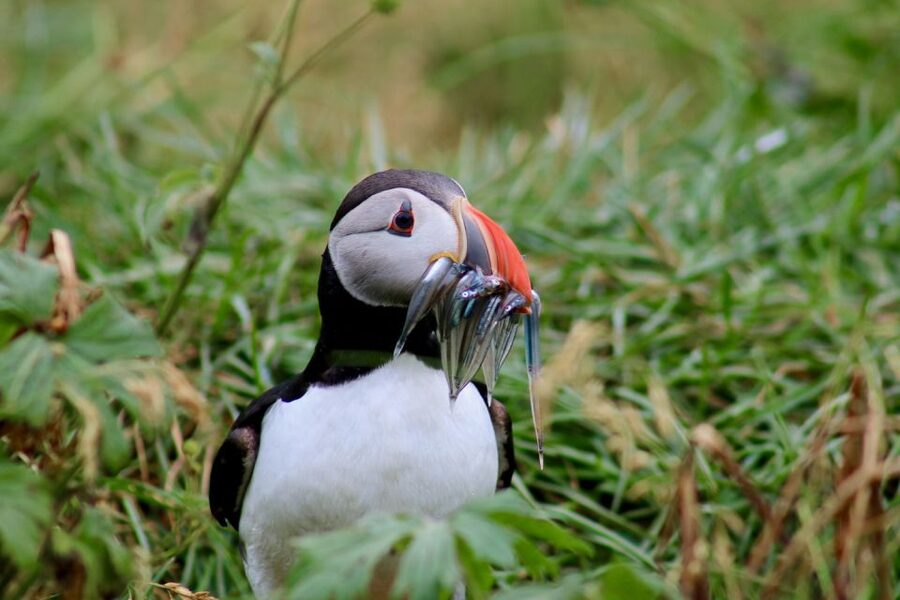
The puffin colony draws most people, yet the islands support a larger cast of seabirds. You may see eider ducks, Arctic terns, guillemots, cormorants, fulmars, geese, and oystercatchers.
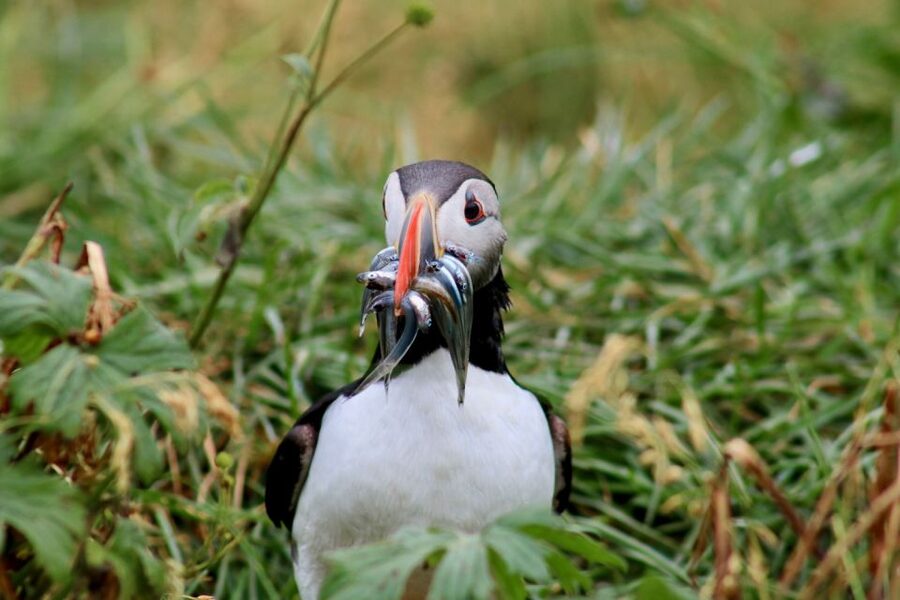
That variety gives the guide plenty to point out while the captain positions the boat. You may learn how long puffins live, what they eat, how many eggs they lay, how far they travel underwater, and which animals threaten them. Guides have also shared stories about the islands and their birdlife, turning a simple sightseeing ride into a short natural history lesson.
The guide can make or break a one-hour trip. Guides such as Frida have given detailed explanations and taken bird photographs for the group, while Olivia has been praised for her friendly manner and practical suggestions about other things to do in Iceland. Names and guide assignments can change, so treat those examples as possibilities, not promises.
Some guides take photographs during the trip and later share them with the group. That can be useful when the weather or boat movement defeats your own camera. Ask how the photographs will be distributed before leaving if this matters to you, since the timing and delivery method may vary.
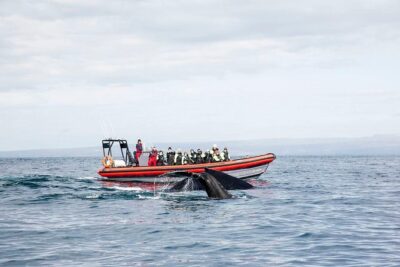
Seals and dolphins are possible bonus sightings based on past departures, but they are not part of the promised program. Come for puffins and seabirds. Anything else is luck.
Weather, tides, and the question of distance
Iceland does not adjust its weather for your photographs. A sunny day can give you crisp views, while fog, wind, or light rain may soften the experience. One trip can have rough seas but a capable captain, and another can have calm water with birds that remain farther from shore.
Tide is just as important. At low tide, the boat may not approach the island as closely. At higher tide, the captain may be able to position the boat nearer to the nesting slopes. This does not guarantee a perfect view, but it is a useful question to ask before choosing a departure.
The puffin season also changes the character of the trip. Early in the season, fewer puffins may have reached the islands, though other seabirds can still make the outing worthwhile. Late in the season, there may still be plenty of birds, but numbers and behavior are never fixed.
I would choose a flexible day if possible. Do not put this trip between two appointments with no spare time. The stated duration is one hour, but some departures have lasted 80 minutes or longer, with the crossing taking more time than expected. Weather, tide, boarding, and the captain’s decision to spend more time near the birds can all affect the schedule.
What you get for $66
At $66 per person, this is not a bargain-basement harbor ride. Iceland is expensive, and a one-hour activity can look costly at first glance. The price makes more sense when you count the boat, crew, naturalist guide, wildlife knowledge, warm gear, and binocular loan.
The value is strongest if puffins are high on your Iceland list and you have only a short window in Reykjavik. You can walk from the center, spend a compact period on the water, and return without giving up a whole day. The trip also contributes to summer research projects, responsible tourism, and organizations working to protect wildlife.
The value is weaker for someone who wants close portrait photography or a long, quiet wildlife session. You may spend only about 30 to 40 minutes focused on the birds, with the rest taken up by the crossing. For a dedicated bird photographer, a longer boat trip or a smaller vessel may be worth comparing, although that is not part of this experience.
I see this as a good first puffin outing, especially for families, cruise passengers, couples, and anyone fitting nature into a city stay. It offers a real encounter without demanding a full day or a complicated journey.
Comfort, access, and practical planning
The boat has an indoor area, and warm overalls, raincoats, and blankets are available. That helps, but I would still wear wool or other warm layers, waterproof footwear, and clothes you can move in. Avoid high heels, and leave suitcases and large bags at your accommodation.
The tour is conducted in English with a live guide. The experience is not suitable for wheelchair users, so check this carefully before booking if mobility access is important.
For parking, allow extra time. The harbor is convenient on foot from central Reykjavik, but finding a parking space can be difficult. Arriving early also gives you time to check in and look around the Whale Watching Centre instead of rushing onto the boat.
You can cancel up to 24 hours before departure for a full refund, and the reserve-now, pay-later option keeps your plans flexible. That is useful in Iceland, where weather can change quickly, though you should still check the exact departure time and cancellation terms when booking.
Who will enjoy this most
I would recommend the trip if you want a simple way to see puffins from Reykjavik and understand what you are looking at. The guide adds value, and the loan binoculars remove one of the main obstacles to seeing small birds at a safe distance.
It suits you especially well if:
- You have never seen puffins in the wild.
- You want a short activity close to downtown.
- You enjoy seabirds beyond the headline species.
- You prefer a wildlife approach that keeps boats off the nesting islands.
- You want warm gear and basic viewing equipment included.
- You can stay flexible about weather, tide, and exact viewing distance.
I would think twice if your main goal is a professional close-up photograph. The puffins may look like small shapes to the naked eye, and even a good camera may struggle in poor light. In that case, bring binoculars, use the provided pair, and judge the trip by the encounter rather than by the number of perfect photographs.
Should you book this puffin tour?
Book it if you want a well-organized, short sea trip with a strong chance of seeing puffins and a useful guide to explain the colony. The free binoculars, warm clothing, harbor location, and responsible approach make the $66 fare reasonable for a quick Reykjavik activity.
Skip it if your schedule is rigid, you dislike boats, or you need birds at very close range. For everyone else, this is a sensible way to meet Iceland’s clown of the ocean without giving up a full day. Just choose a departure with tide conditions in mind, arrive early, dress for wet weather, and leave room in your schedule for the boat to run long.
FAQ
Where does the puffin tour leave from?
Check in at Elding’s ticket office at Ægisgarður 5, 101 Reykjavik. It is about 300 meters, or a five-minute walk, from the downtown area.
How long does the tour last?
The tour is advertised as one hour, with about 15 minutes to reach the island, 30 minutes for wildlife viewing, and 15 minutes to return. Actual trips can last around 80 minutes or longer depending on conditions.
Which island will the boat visit?
The boat may visit Akurey, Engey, or Lundey. The captain chooses the destination based on tides and weather.
Are binoculars provided?
Yes. You can borrow binoculars onboard, which are useful because puffins are small and the boat does not always approach the island closely.
What other birds might I see?
You may see eider ducks, Arctic terns, guillemots, cormorants, fulmars, geese, and oystercatchers, as well as puffins.
What should I wear?
Bring weather-appropriate clothing. Warm overalls, raincoats, and blankets are available onboard, but you should still dress in warm layers and suitable footwear.
Is the tour suitable for wheelchair users?
No. The activity is not suitable for wheelchair users. High-heeled shoes, luggage, and large bags are also not allowed.
Newest birding reviews around Reykjavik
- Puffin Jet ski tour in Reykjavík★ 5.0 · 43 reviews
- Reykjavik: Puffin Watching Tour★ 4.5 · 45 reviews
- Reykjavik Shore Excursion: Puffin Sightseeing Cruise★ 4.0 · 56 reviews
- Two-In-One: Whale & Puffin Watching Tours from Reykjavik★ 4.5 · 59 reviews
- Reykjavik Premium Puffin tour | Close Up and Personal★ 4.5 · 71 reviews
- Conventional Ride (Free as a Bird) from Hveragerdi★ 5.0 · 71 reviews
- Iceland Super Saver: Puffin Cruise plus Whale-Watching Tour from Reykjavik★ 4.0 · 110 reviews
- From Reykjavik: Puffin and Volcano Tour in Westman Islands★ 4.7 · 111 reviews
Puffin Watching Tours, side by side.
Original Big Whale Safari & Puffins by Speedboat
Read our review →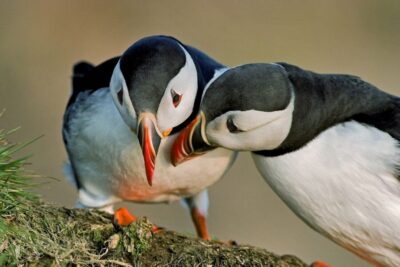
Puffin Cruise with Expert Tour Guide from Reykjavik
Read our review →