
REVIEW · CHILE
Whales & Humboldt Penguins: Chañaral or Damas island hiking
The big draw here is the Humboldt penguin reserve, where a boat trip can bring you close to penguins, sea lions, otters, seabirds, dolphins, and whales in one remarkable stretch of Chilean coast. The ride begins after a long but interesting drive from La Serena, through fishing villages, desert country, and old routes shaped by Indigenous fishing cultures, miners, shepherds, and seaweed collectors.
I like the mix of wildlife and human history, and I like that the day includes transport, a bilingual guide, reserve admission, boat travel, and lunch with a drink. The main caution is time: this is a 10-hour outing, and the actual boat portion can feel short if your main goal is whale watching. Sea conditions also decide what you see.
Key points to know before booking
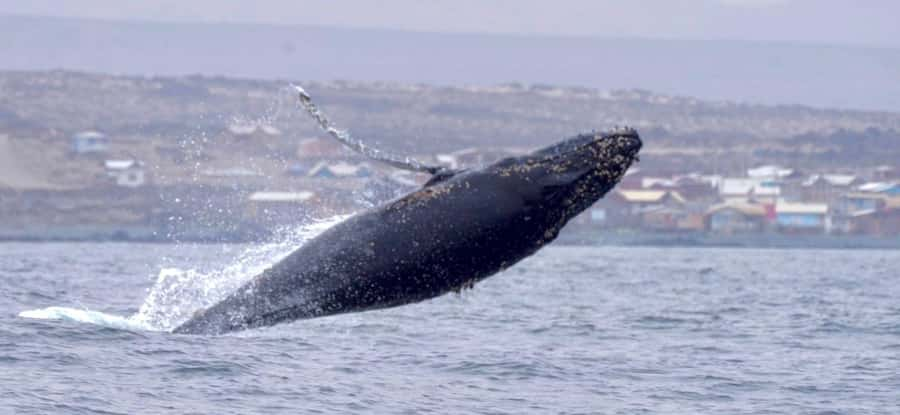
- Whales are possible, not guaranteed: Some outings see whales and dolphins, while others find mainly penguins and seals.
- The road journey matters: Stops at Punta Teatinos, Juan Soldado bridge, Caleta Los Hornos, La Higuera, and Quebrada de los Choros add coastal and desert context.
- Choros and Damas islands offer different pleasures: One is mainly viewed from the boat, while Damas includes time on land for walking and scenery.
- The wildlife list is impressive: Expect possible Humboldt penguins, sea lions, sea otters, seabirds, dolphins, and whales.
- Lunch is included in Los Choros: You get a choice of starter, main course, dessert, and a drink, though the meal may feel rushed if the schedule runs late.
- The ride is not for everyone: People prone to seasickness, with back problems, mobility impairments, or epilepsy should choose another outing.
From La Serena into Chile’s Green North
Your day starts with pickup at your accommodation in La Serena. Air-conditioned transport is a welcome feature because the trip covers a lot of ground before you even reach the boat. The route moves from the greener Coquimbo area toward the edge of the Atacama, where the scenery becomes drier, barer, and more striking.
This road section is not filler. It explains why the marine reserve is so unusual. You are traveling through a meeting point between coastal desert and a more fertile northern region, with plant life, cactus, farmland, and settlements changing as the miles pass.
The guide adds the human story. You hear about ancient shepherds, miners, farmers, and coastal communities descended from Indigenous fishing peoples. The region is also linked to the Choros, Camanchacas, and Changos, people whose lives depended on fishing, shellfish, marine animals, and seaweed. The area’s old sealion-skin fishing rafts give the islands a past that is far stranger and more memorable than a simple wildlife excursion.
Guides Christopher and Martin have received particularly strong praise for their work on the road, with Christopher noted for his driving and Martin for sharing information and stopping when something interesting appeared. The quality of the guide matters here because the road stretches for hours, and a silent transfer would make the day feel much longer.
More Penguin Tours in Chile:
- Punta Arenas: Walk with Penguins on Magdalena & Marta Island
★ 4.6 · 611 reviews - Punta Arenas: Full-Day Whales, Penguins, and Glaciers Tour
★ 4.9 · 325 reviews - Punta Arenas: Full Day Tierra del Fuego & King Penguins
★ 4.3 · 179 reviews
Punta Teatinos and the first coastal views
The first short stop is Punta Teatinos, with about five minutes for a guided look at the coast. It is brief, so do not expect a full walk or a long photo session. Think of it as a quick introduction to the scenery ahead.
The coast around La Serena has a different feel from the dry interior. You begin to see how the ocean, desert, and settlement patterns fit together. If you like taking photographs, keep your camera ready in the vehicle. Several stops are short, and the group will need to stay on schedule for the boat.
Juan Soldado bridge and Caleta Los Hornos
At the old Juan Soldado bridge, you get roughly 10 minutes for photographs and explanation. This is one of the stops where the guide can connect the route with local stories and geography. The historic structure gives the drive a sense of age, even though the visit itself is quick.
Caleta Los Hornos follows, with another short guided stop. The word caleta refers to a small fishing cove, and the community helps you understand the working coast you are passing through. This is not a polished resort strip. The appeal lies in seeing places tied to boats, fishing, and everyday coastal life.
You then continue through La Higuera, a settlement with about 20 minutes of sightseeing and commentary. The name is closely linked with the northern interior, where mining and rural life have shaped communities for generations. The stop helps break up the drive, but the main value is the view through the vehicle window and the guide’s explanation.
Quebrada de los Choros and the road to the sea
At Quebrada de los Choros, you have around 20 minutes for a photo stop, free time, and wildlife viewing. This is one of the more useful breaks because the scenery begins to feel properly desert-like. The contrast between dry slopes, scattered vegetation, cactus, and the distant sea is a central part of the trip.
Wildlife may appear before you reach the harbor. Past outings have included sightings of guanacos, wild donkeys, and foxes along the road. These encounters are not promised, so treat them as fortunate extras rather than part of the fixed program. The guide may stop when something worthwhile appears, but the group still has to reach Punta de Choros on time.
The drive can be the hardest part for people who only want a boat trip. One account found the road journey stretched out and felt the day could have been shorter. I would book this with the understanding that you are buying a full regional outing, not a quick transfer to the water.
More Whale Watching in Chile:
- Húsavík: Original Big Whale Safari & Puffins by Speedboat
★ 4.7 · 1,221 reviews - Húsavík: Big Whales and Puffin Island Speedboat Tour
★ 4.8 · 979 reviews - Newfoundland Puffin and Whale Watch Cruise
★ 5.0 · 837 reviews - Whale, Dolphin & Penguin Island Cruise
★ 5.0 · 687 reviews
Punta de Choros: safety first, then the boat
Punta de Choros is the main departure point. You have about 20 minutes for a break, photographs, a guided visit, and the boat safety briefing. This is where the day changes from road trip to marine excursion.
The boat navigation takes you around the island area, including Choros and Damas. A safety briefing is important because wind, tides, and waves control the experience. The operator checks conditions two days before departure and informs passengers if the weather is not suitable. That flexibility protects the quality and safety of the outing, but it also means the schedule depends on nature.
Bring warm, weather-appropriate outdoor clothing even if La Serena feels comfortable when you leave. The boat can be cold and exposed, and conditions may change quickly. I would also avoid a heavy breakfast if you are prone to seasickness. The activity specifically warns that it is not suitable for people who regularly get sick on boats.
Around Isla Choros: penguins, sea lions, and possible whales
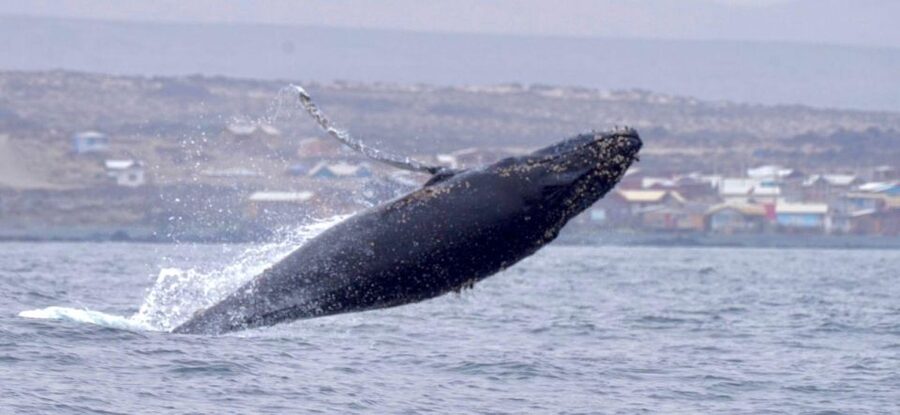
The boat spends about an hour around Isla Choros for marine wildlife viewing. This is one of the strongest parts of the trip, but it is also where expectations need careful handling.
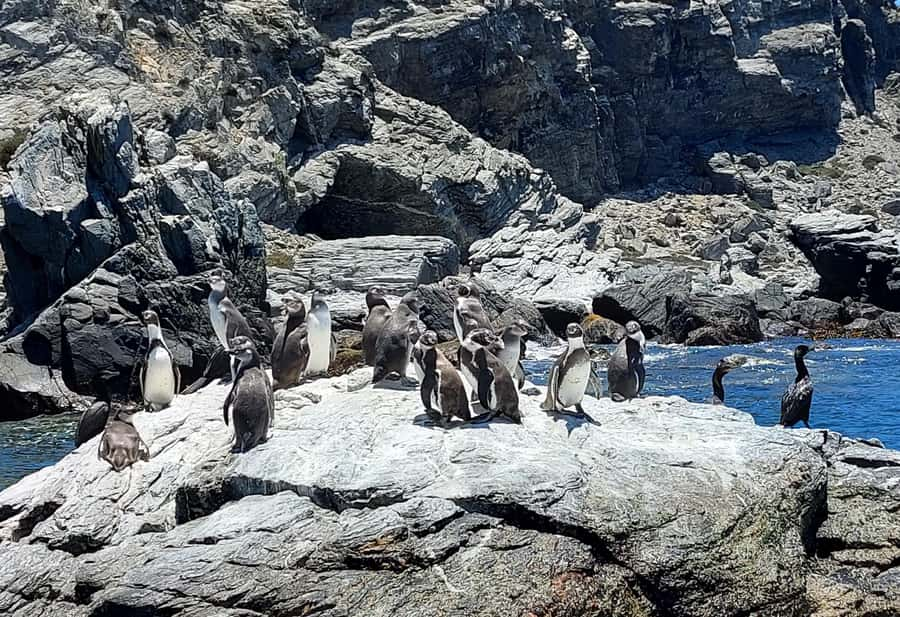
Humboldt penguins are a major attraction. The species is tied to the cold Humboldt Current, which brings nutrient-rich water along this coast and supports a large food chain. You may see penguins on the rocks or in the water, along with sea lions and seabirds gathered around the islands.
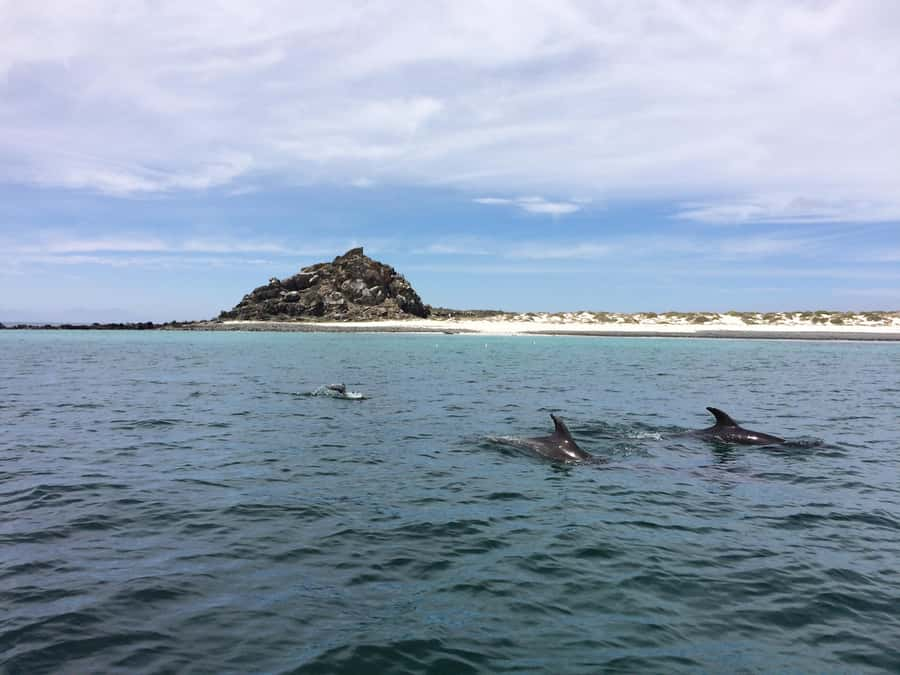
Sea otters are another possible sight, and the coastline can produce dolphins and whales. Some outings have had a remarkable mix of sea lions, penguins, otters, raptors, dolphins, and whales. Others have seen only one penguin and a few seals. Both outcomes are realistic. Wildlife is wild, and the boat cannot order a whale to appear on schedule.
Whale watching is the most uncertain part. Recent outings have produced memorable whale encounters, including one described as mind-blowing, while another saw five Humboldt penguins but no comparable whale show. If whales are your single reason for booking, this is a gamble. If you value the whole setting and will be pleased with penguins, seabirds, and sea lions, the odds feel much better.
The boat portion has also been described as about three hours in total, though the detailed schedule assigns roughly one hour around Isla Choros and another hour at Isla Damas, with additional navigation between locations. The exact time on the water can vary with conditions, boat operation, and the day’s pace.
Isla Damas: the walk and the beach
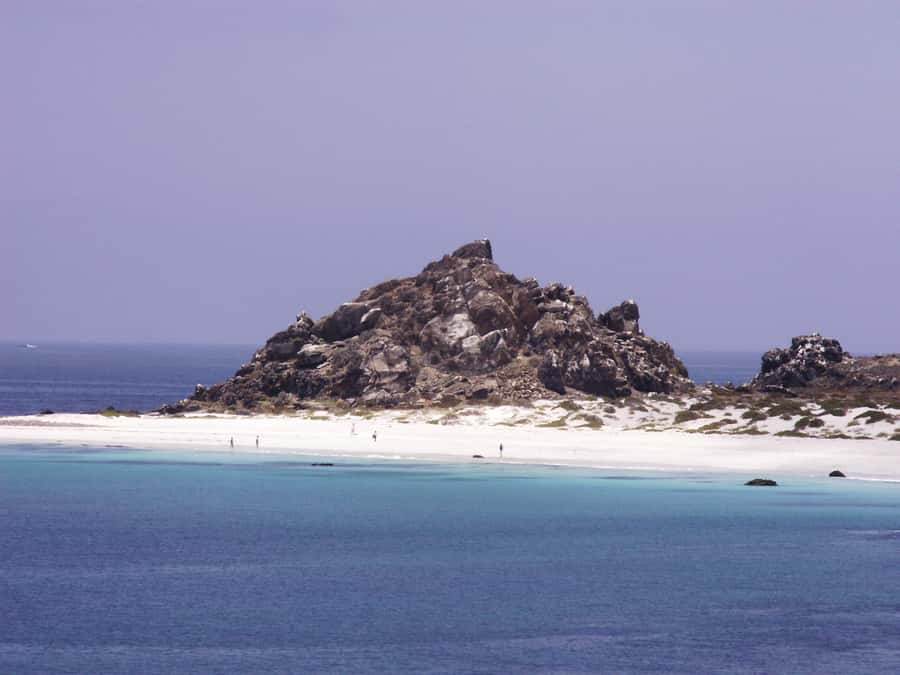
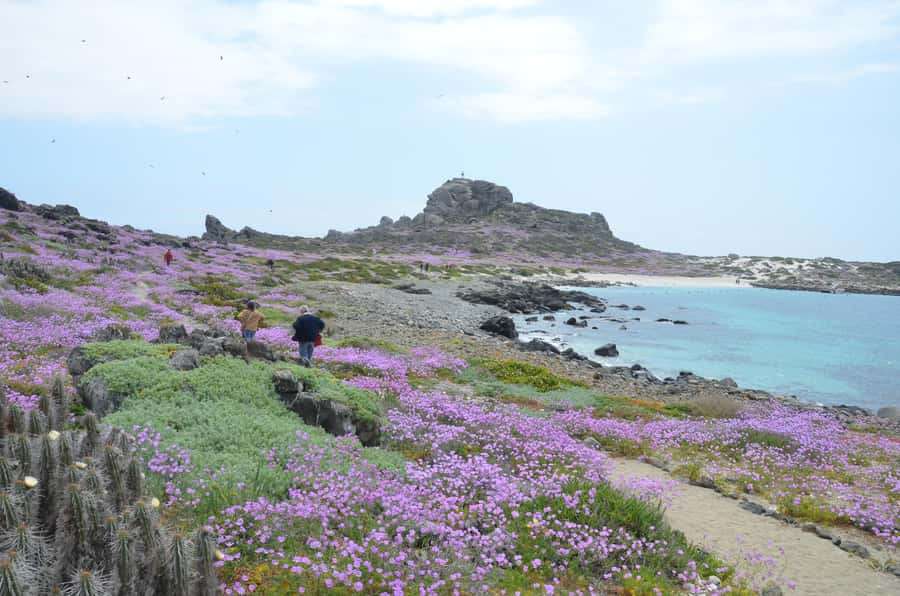
Isla Damas gives you about an hour for a guided visit, photographs, free time, and walking. This is the part of the day that gets you off the boat and onto an island. You can expect a short hike or walk, coastal views, and time to notice the island’s cactus, plants, beaches, and rock formations.
The island scenery has a stark charm. Stone formations are linked with local myths about figures and gods, while cactus grows beside a sea crowded with birds and marine life. You are seeing two very different worlds at once: a dry island under an intense northern sky and cold Pacific water supporting penguins and whales.
The walk is not a good match for everyone. The experience excludes people with mobility impairments and back problems, and the combination of uneven ground, boat movement, and outdoor exposure requires a reasonable level of comfort. People with epilepsy are also advised not to participate.
If you enjoy natural scenery but do not need a long hike, the hour on Damas should be enough to give the day variety. If you want a serious trek, this is not that. The focus is on a guided island visit, photographs, and the chance to experience the reserve from land as well as water.
Lunch in Los Choros and the long ride home
After the island visit, you return to Los Choros for a 70-minute break with lunch, dessert, and a drink. The menu includes different starter, main course, and dessert options, along with wine, water, or a soft drink. That is useful after a morning of road travel and time on the water.
The meal adds local flavor and gives you a chance to ask the guide questions. Seafood and drinks are part of the appeal, although the food should be viewed as a convenient included meal rather than the main reason to book.
Timing is worth watching. One outing had so little slack that the last person received lunch only about 10 minutes before departure. If your group is large or service is slow, the promised 70 minutes may feel shorter. Eat promptly and keep an eye on the departure time.
The return to La Serena completes a 10-hour day. That is a long stretch, especially if you are uncomfortable in vehicles or boats. On the other hand, the length allows the excursion to combine several experiences that would otherwise require separate arrangements: regional sightseeing, a marine reserve, island walking, wildlife viewing, and lunch.
Is the $280 price good value?
At $280 per person, this is not a budget outing. The price makes more sense when you count what is included: pickup and drop-off in La Serena, air-conditioned transport, a bilingual specialized guide, national park or marine reserve admission, boat travel, and a multi-course lunch with a drink.
The value is strongest if you would otherwise need to arrange transport to Punta de Choros, find a boat operator, buy reserve admission, and organize food. The guide also gives the road journey a purpose by explaining the history and ecology of the region.
The value is weaker if you mainly want a short whale-watching cruise. The road occupies a substantial part of the day, and whale sightings cannot be guaranteed. A person who dislikes long transfers may feel that the marine portion is too brief for the cost.
I see this as a full-day regional experience rather than a simple wildlife ticket. You are paying for access to a remote coast and for someone else to manage the complicated transport and timing. That is worthwhile for many visitors staying in La Serena, especially those who want more than a city tour.
Who should book this experience?
I would choose this tour if you enjoy natural history, coastal communities, desert scenery, and unpredictable wildlife in equal measure. It suits you especially well if you like asking questions and want a guide to explain why the region looks and feels so different from central Chile.
It is also a good choice for photographers and wildlife watchers who understand that patience and luck are part of the deal. Pack warm layers, protect your camera from sea spray, and leave room for sightings that cannot be scheduled.
I would think twice if you have back trouble, limited mobility, epilepsy, or strong seasickness. I would also skip it if you have only a few hours available or if a guaranteed whale sighting is essential.
Should you book the Chañaral or Damas island outing?
Book it if you want a long, carefully organized day that links Chile’s desert edge with one of its best-known marine wildlife areas. The strongest rewards are the variety of scenery, the stories about coastal peoples, and the chance to see penguins, sea lions, seabirds, dolphins, otters, or whales in one trip.
Do not book it expecting a quick boat ride or guaranteed whales. The road is long, lunch can feel rushed, and the sea decides what appears. But if you can accept those limits, the combination of remote islands, cactus, cold Pacific water, and expert guiding offers a memorable view of northern Chile that is hard to arrange on your own.
FAQ
How long does the tour take?
The full experience lasts about 10 hours, including pickup and drop-off in La Serena, the road journey, boat travel, the island visit, lunch, and the return trip.
Where does pickup take place?
Pickup and drop-off are provided at your accommodation in La Serena.
Which languages are available?
The tour has live guides in English and Spanish.
Are whales guaranteed?
No. Whale and dolphin sightings depend on wildlife and sea conditions. You may also see Humboldt penguins, sea lions, sea otters, and seabirds.
What should I bring?
Bring warm clothing, weather-appropriate outdoor clothing, and practical clothes for time on a boat and outdoors.
Can the tour be canceled because of weather?
Yes. The outing depends on wind, tides, waves, and suitable climate conditions. Conditions are checked two days before departure, and passengers are informed if they are not suitable.
More Walks and Hikes in Chile
- From Agadir: Camel Ride and Flamingo Trek
★ 4.7 · 371 reviews - Full-Day Mindo Cloud Forest Tour Birdwatching Waterfalls and Hike
★ 5.0 · 84 reviews - Private Birding Hike in Rocky Mountain National Park
★ 5.0 · 58 reviews - Trekking, wineries, birdwatching, local gastronomy, etc.
★ 5.0 · 25 reviews
Newest birding reviews around Chile
- Magdalena Island: Walk with the penguins★ 4.6 · 17 reviews
- Penguin Watching Navigation Cachagua Lunch From STGO Private Tour★ 5.0 · 50 reviews
- Fr STGO: WILD PENGUINS, SEALION, SANDBOARD, PARAGLIDING & PICNIC★ 5.0 · 50 reviews
- Fr VALPO: WILD PENGUINS, SEALION, SANDBOARD, PARAGLIDING & PICNIC★ 5.0 · 57 reviews
- Magdalena Island Penguin Tour by Boat from Punta Arenas★ 4.7 · 62 reviews
- Punta Arenas: King Penguin Park and Tierra del Fuego Trip★ 4.0 · 67 reviews
- Punta Arenas: Magdalena Island Navigation & Penguin Walk★ 4.2 · 73 reviews
- King Penguin Nature Reserve – Tierra del Fuego Island★ 4.0 · 73 reviews
Penguin Tours, side by side.
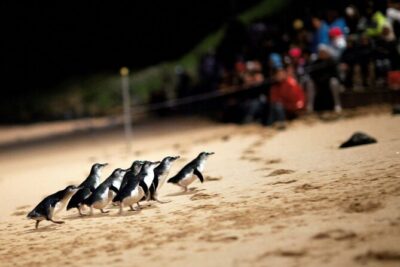
Penguin Parade, & Wildlife Encounters Eco Tour from Melbourne
Read our review →
Cape of Good Hope & Penguins Day Tour with Pickup
Read our review →
Cape Point and Boulder’s Penguins Full Day Tour
Read our review →
Cape of Good Hope & Boulder Penguins Full-Day Tour from Cape Town
Read our review →
Table Mountain, Penguins & Cape Point Small Group Tour Cape Town
Read our review →
Cape Town Tour: Table Mountain, Penguins & Cape Point+Pickup
Read our review →
Lists this trip turns up in