
REVIEW · NEW ZEALAND
Akaroa: Pohatu Little Penguins 3-Hour Evening Experience
Pohatu’s little penguins are the real deal: wild birds living along the rugged coast near Akaroa, not animals performing on a schedule. On this three-hour evening outing, you ride over the volcanic crater rim, help check nesting boxes, and watch the bay as darkness gathers. The conservation work is the heart of the experience, and your $68 ticket helps support more than 30 years of local protection and monitoring.
I like the scenic drive and the small-group format, limited to 12 people. I also like the honest approach to wildlife viewing: guides provide binoculars and camouflage gear, but no floodlights, flash photography, or noisy crowd is allowed. The main caution is simple: penguins are wild, and you may see only a few, particularly outside the breeding season or if the weather turns cold and wet.
Key points at a glance
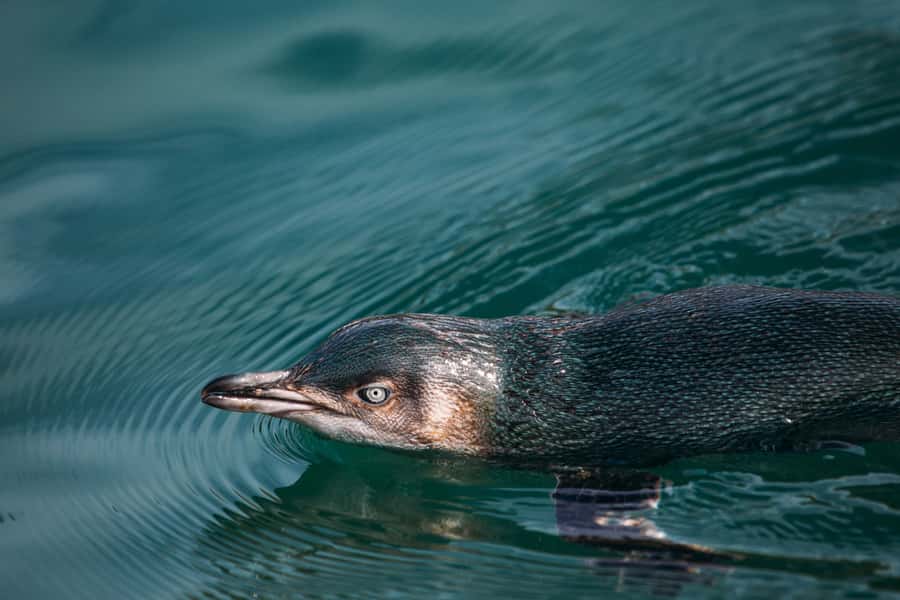
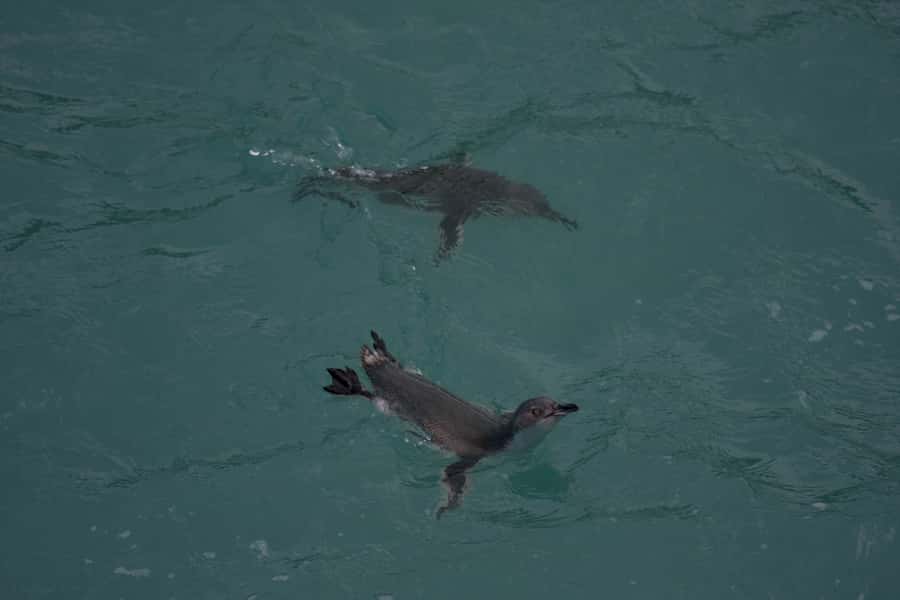
- Wild penguins at dusk: Watch white-flippered penguins on the water and possibly see them return to shore.
- A striking 4WD journey: Cross the Akaroa volcanic crater rim with photo stops overlooking the harbor and Pacific Ocean.
- Conservation in action: Check small wooden nesting boxes, collect data, and learn how the colony was brought back from the edge of extinction.
- Small and quiet: Groups are limited to 12, with strict rules protecting the birds from light and noise.
- Season matters: September through December is the breeding period, while March to mid-April can have very few or no penguins.
- Bring proper footwear: Narrow, steep trails make hiking shoes and good mobility important.
From Akaroa to remote Pohatu Bay
You meet before St Peter’s Church in Akaroa, then set off in a 4WD minivan toward Pohatu, also called Flea Bay. The drive takes about 30 minutes and is part of the experience, not just a transfer.
The route crosses the rim of the old Akaroa volcano. That gives you a helpful sense of Banks Peninsula’s unusual shape and geology, while the guide fills in the story of local plants, animals, farming, and settlement. Guides including Ben, Tayla, Mona, Gayla, Kevin, and Joey have been praised for making the drive as informative as the penguin stop itself.
You make photo stops along the way. Expect broad views across Akaroa Harbour and out toward the Pacific Ocean, with the weather playing a large part in how much you see. On a clear evening, the views can be a major bonus. On a wet or cold evening, the drive still provides useful context, but you will want a warm jacket close at hand.
The route is scenic rather than quick and direct. If you are mainly seeking a short penguin sighting, the drive may feel long. I think it earns its place because it takes you to a remote colony and gives you a better understanding of why this part of the peninsula matters.
More Penguin Tours in New Zealand:
- Oamaru: Penguins Evening Viewing Ticket
★ 4.5 · 682 reviews - Guided Evening Penguin Viewing Otago Peninsula, Dunedin, New Zealand
★ 5.0 · 471 reviews - Dunedin: Wildlife and Penguin Tour
★ 4.6 · 239 reviews
Why the conservation work matters
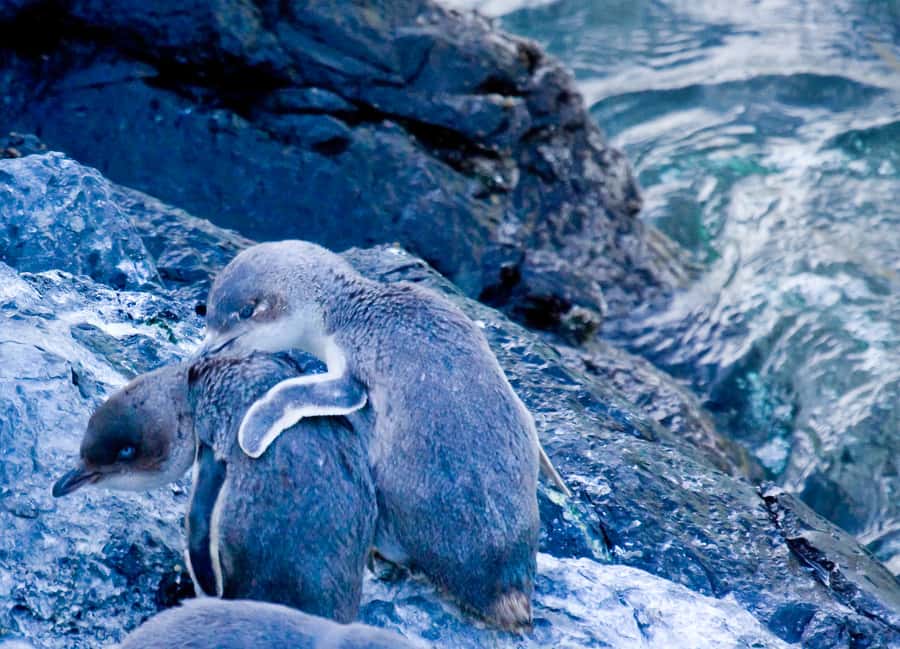
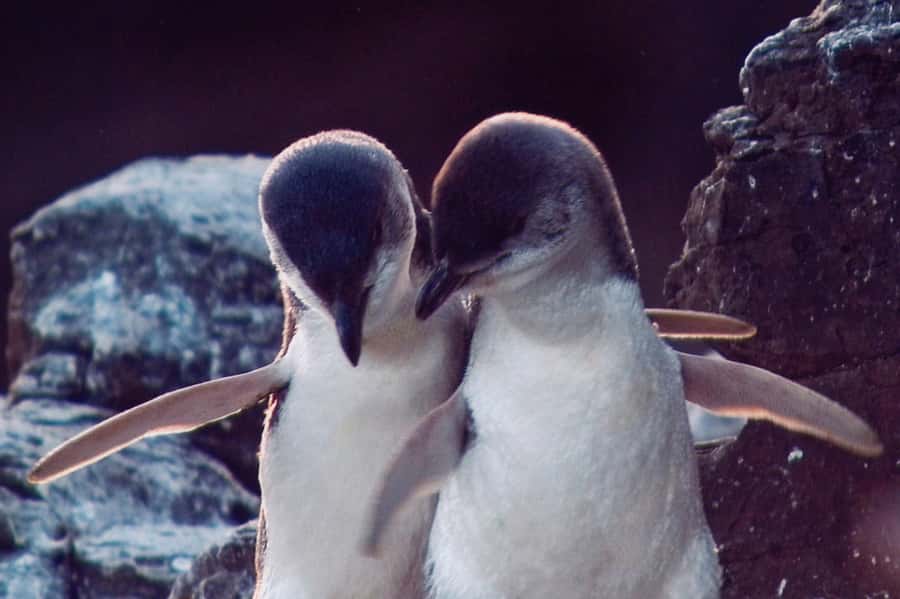
Pohatu’s white-flippered penguins are a local form of little penguin, the world’s smallest penguin species. The colony survived years of pressure from predators and other threats, and more than 30 years of conservation and monitoring have helped protect it.
That work is visible during the tour. Instead of simply standing at a viewing platform, you walk around the colony with the guide and check small wooden nesting houses. You may help collect information about nesting sites and the condition of the birds. At certain times of year, you may also see parts of the rehabilitation program, including supplemental feeding.
This gives the outing more purpose than a standard wildlife stop. You are not being promised a guaranteed show. You are seeing a working conservation project, with the birds’ welfare placed ahead of a perfect photo.
The setting is carefully controlled. Only guided groups can enter the breeding colony, and the group size is limited to 12. That helps reduce crowding around the nest boxes and keeps the visit quieter. The rules are firm for good reason: no smoking, no loud behavior, and no flash photography.
Checking nest boxes and watching the bay
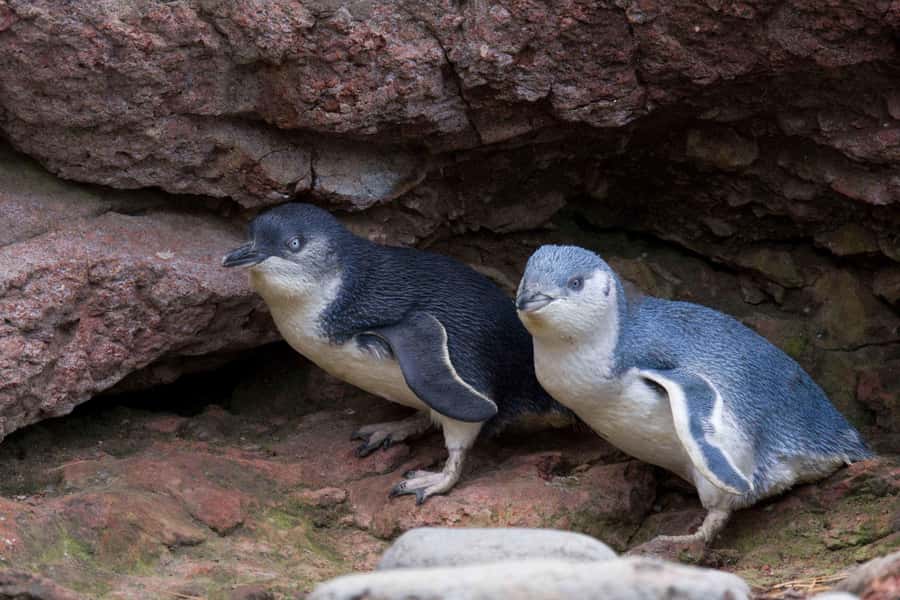
At Pohatu, the tour has two distinct parts. First comes the monitoring work around the nesting sites. This is where you may get your closest look at the penguins, particularly during the breeding and moulting seasons.
A penguin inside a nest box is not a staged encounter. It may be resting, moulting, or caring for young, and the guide will explain what you are seeing. You need to follow instructions carefully and keep your movements quiet. The point is observation, not touching or coaxing a bird into view.
Several visitors have been able to see penguins in the boxes during January and February moulting season, while late November visits have included sightings of young birds and adults returning from the water. Those close views can be memorable, but they depend on which boxes are occupied and how the birds behave that evening.
The second part takes place around the bay. Binoculars are supplied so you can scan the water for penguins socializing offshore. Camouflage gear is also provided to make viewing less intrusive and improve your chances of spotting movement.
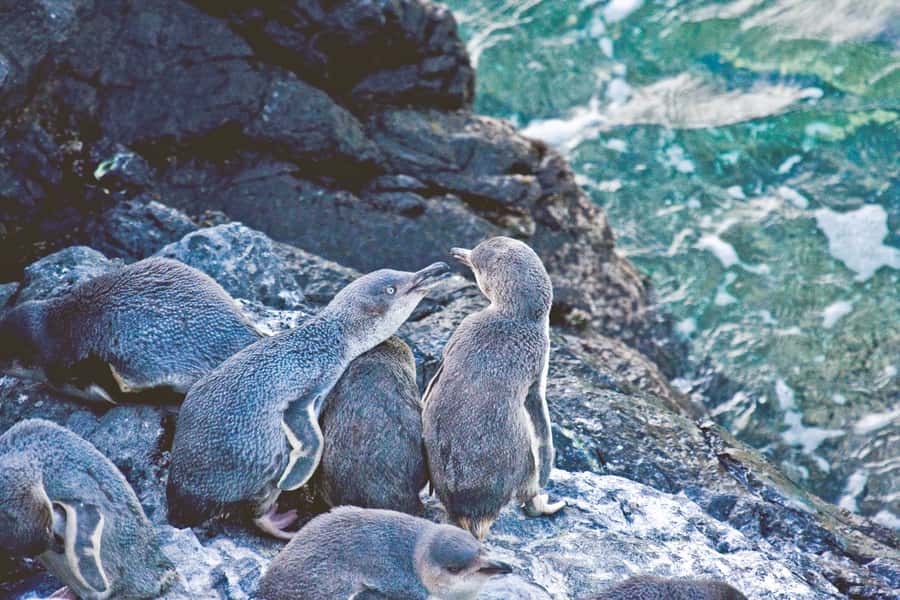
As dusk settles, some adults may begin heading toward shore. You might see small shapes bobbing in the water, then watch them climb onto rocks or move across the beach. The timing is unpredictable. The birds may remain offshore, and darkness may arrive before any penguin reaches land.
That uncertainty is worth understanding before you book. This is not a guaranteed penguin parade. The experience is strongest when you value patient wildlife watching and the chance to see natural behavior.
Natural darkness, no artificial lights
The tour ends when it becomes too dark to view the birds responsibly. Artificial lighting is not used because it can disturb the penguins. Flash photography is also forbidden.
This means the viewing window can be short. Depending on the season and sunset, you may spend part of the evening watching the water in fading light, then leave once the colony becomes difficult to see. The absence of bright lights is a benefit for the penguins, but it also means you should not expect brightly lit photographs.
Bring a phone or camera for the scenery and daylight moments, but use it without flash. The best memories may come from watching the bay change color, listening to the guide explain penguin behavior, and spotting a small bird moving through the surf.
The no-light policy also creates a calmer mood. You are not surrounded by screens and camera flashes. The group has to slow down and pay attention, which suits this kind of wildlife encounter.
More Evening Experiences in New Zealand:
- Cape Town: Penguins and Cape of Good Hope Sunset Tour
★ 4.2 · 303 reviews - Trapani: Salt Pans Sunset Tour and Flamingo Way
★ 4.4 · 252 reviews - Night Walk Experience at Natura Eco Park, (frogs snakes mammals insects birds)
★ 4.5 · 57 reviews - Flamingo-Birdwatching in the Ebro Delta at Sunset
★ 4.6 · 42 reviews
The best time to see penguins
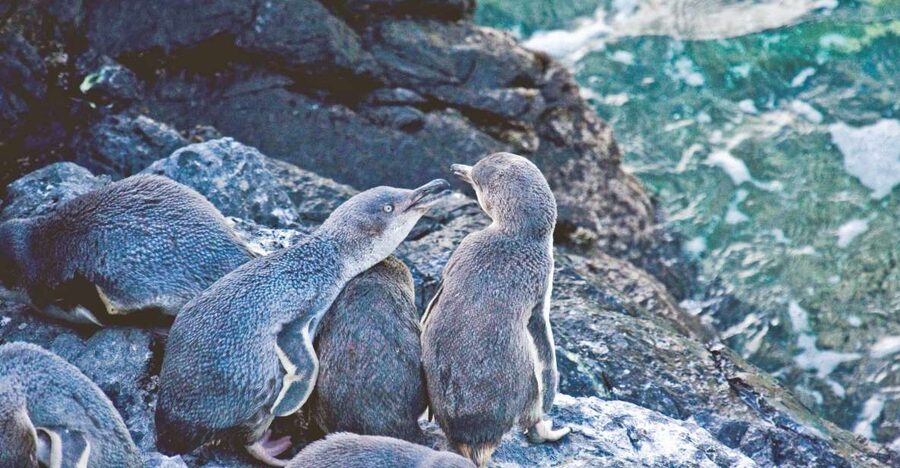
The colony follows a seasonal pattern, so timing matters more here than it does on many sightseeing tours.
- Mid-September through December: This is the breeding season. Nesting activity is at its strongest, and you have a better chance of seeing young birds and adults coming and going.
- January through mid or late February: The birds moult. Penguins may remain in nest boxes during this period, which can offer close views even though fewer are actively heading ashore.
- Early March through mid-April: There are generally no penguins in the colony during this period.
- Winter: Penguins come and go. Sightings are possible, but numbers may be low, and finding a bird is less certain.
The supplied information says there are times when the colony has higher numbers and times when only a few birds are present. I would pay close attention to the season when planning. If seeing several penguins is your main goal, the breeding period from late spring through early summer offers the clearest opportunity.
That does not make the quieter months pointless. A February visit may include penguins in their boxes, and winter trips can still bring sightings, seals, sheep, and strong coastal scenery. Just book with realistic expectations.
What the guides add to the experience
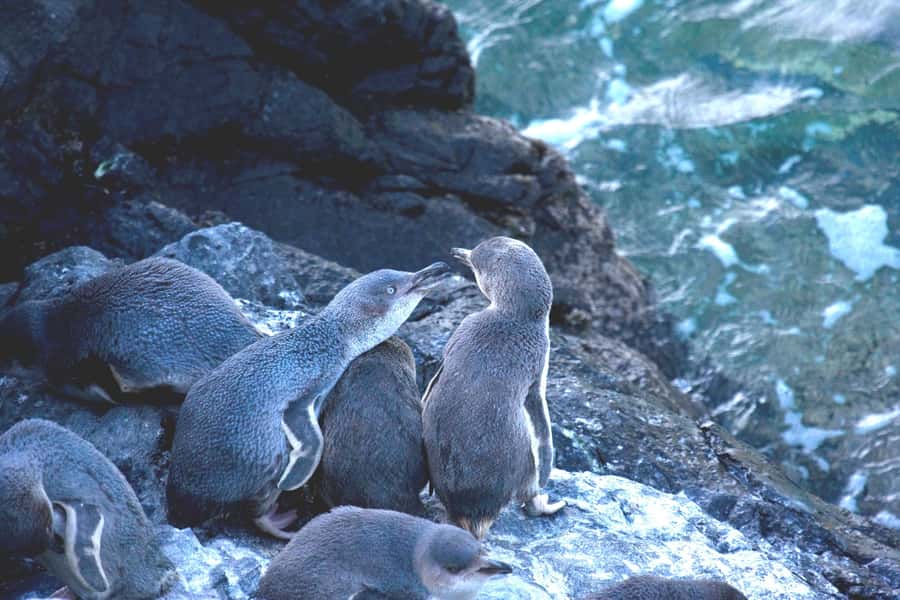
The guide can make or break a wildlife tour, and this outing gives the guide plenty to work with. You learn about penguins, but also about Akaroa’s geology, native and introduced plants, farming, seals, sea lions, sheep, and other wildlife around the peninsula.
Ben has been praised for his clear explanations and passion for both the birds and Akaroa. Tayla has added useful information about local wildlife and even pointed out that an aurora might be visible later that night. Mona, Gayla, Kevin, and Joey have also led groups with a strong focus on conservation and local ecology.
The best guides here do not simply point toward a penguin. They explain why the bird is using a particular habitat, what the nesting boxes do, and how monitoring supports the colony. That wider context helps you understand the place instead of treating it as a quick animal photo stop.
The small group helps. With up to 12 people, it is easier to hear the guide and ask questions. Larger groups can still be split into smaller sections around the nesting area, so the colony does not feel crowded.
How demanding is the walk?
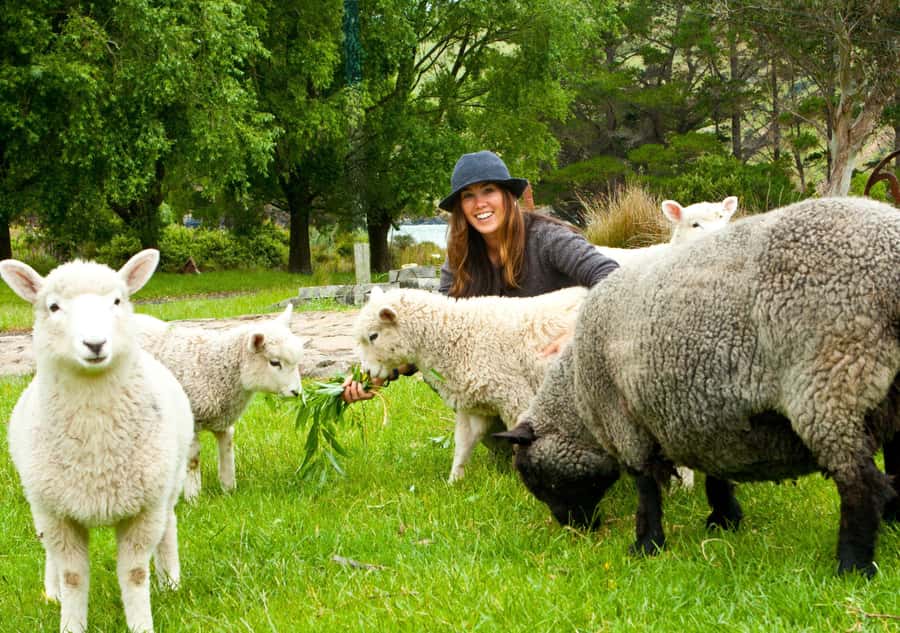
This is not a wheelchair-friendly outing, and it is not suitable for people with mobility impairments. You walk on narrow trails, with some steep sections, around the colony.
Wear hiking shoes rather than casual sneakers. Weather-appropriate clothing is just as important. The coastal setting can feel cold after sunset, and one February visit was described as rainy and chilly. The tour continues in changing conditions unless weather or safety requires otherwise, so a warm outer layer is a sensible choice.
The walking distance is not specified, but the terrain is enough to matter. If you are unsure about balance or steep paths, contact the operator before booking. The 4WD minivan gets you to the remote bay, but it does not remove the need to walk around the nesting area.
Is $68 good value?
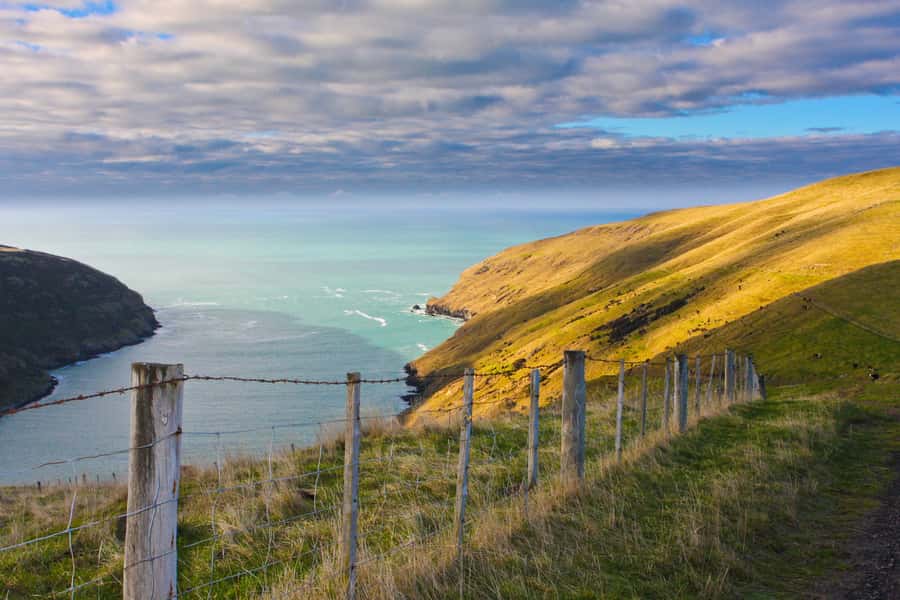
At $68 per person, this is fairly priced for a three-hour small-group outing that includes transport, a guide, photo stops, binoculars, camouflage equipment, and access to a protected breeding area.
The value comes less from the number of penguins counted and more from the whole package. You get the volcanic crater-rim drive, wide views, natural history, conservation work, and a chance to see wild birds without artificial lighting or staged handling. Part of your ticket also supports the long-running monitoring project.
Still, the price does not buy certainty. You could see several penguins in nest boxes, birds offshore, seals, and other wildlife. You could also have a cold evening with only a few distant sightings. If you need guaranteed close viewing, a controlled wildlife attraction may feel more predictable, but it would not offer the same natural setting or conservation focus.
I consider the tour good value for people who accept that wildlife sets the schedule. It is particularly worthwhile for anyone who wants to understand how a small local colony is protected, not just take a penguin photo.
Practical details before you book
The departure time changes with sunset. The operator sends updated information by email and asks you to confirm the exact time close to the date of the tour. Do not rely on a fixed departure time from an old itinerary. Check your messages before heading to St Peter’s Church.
The activity is conducted in English. Free cancellation is available up to 24 hours before departure, and you can reserve now and pay later, which helps if your South Island plans are still shifting.
Allow the full three hours. The drive, photo stops, monitoring, and natural viewing all form part of the outing. If you have a flight, cruise departure, or other fixed appointment, leave plenty of extra time rather than trying to fit this into a narrow gap.
Who should book this Akaroa penguin tour?
I would recommend it to nature lovers, families with older children who can stay quiet, photographers who understand the limits of low-light viewing, and anyone interested in conservation. It also suits people who want a small group and a scenic introduction to Banks Peninsula.
You should think twice if you dislike uneven paths, cold evenings, slow wildlife watching, or uncertain results. The tour is not built around constant action. At times, you may be standing quietly with binoculars, waiting for movement on the water.
For the best chance of seeing active nesting and young birds, choose a date from mid-September through December. For penguins in nest boxes, January and February can be rewarding. Avoid early March through mid-April if a penguin sighting is essential, since the colony generally has no penguins then.
Should you book it?
Book this tour if you want a responsible, locally focused penguin experience and can accept that nature may provide only a few sightings. The scenery, guide-led conservation work, and quiet viewing make it much more than a simple drive to a lookout.
Skip it if you need guaranteed numbers, bright photography, or easy, flat access. For everyone else, Pohatu offers a meaningful way to see white-flippered penguins in their own environment while helping protect the colony that makes the experience possible.
FAQ
Where does the Pohatu penguin tour depart from?
The meeting point is before St Peter’s Church in Akaroa.
How long does the experience last?
The activity lasts three hours, including transport, photo stops, conservation monitoring, and penguin viewing.
How much does the tour cost?
The listed price is $68 per person.
What type of transport is used?
You travel from Akaroa to Pohatu or Flea Bay in a 4WD minivan.
Are penguins guaranteed?
No. Penguin sightings depend on weather, season, and natural behavior. The birds may remain on the water, and they may not come ashore before it becomes too dark.
When is the best season for nesting activity?
The colony breeds from mid-September through the end of December. This is the main period for nesting activity and young birds.
Are there penguins all year?
No. There are generally no penguins in the colony from early March to mid-April. During winter, birds come and go, and numbers can be low.
Is artificial lighting used?
No. The tour relies on natural light because artificial lighting can disturb the penguins.
What should I bring?
Bring hiking shoes and clothing suited to the weather. Warm layers are sensible because the evening can become cold.
Is the tour suitable for wheelchair users?
No. The experience is not suitable for wheelchair users or people with mobility impairments because the trails can be narrow and steep.
More Three-Hour Experiences in New Zealand
- 3 Hour ATV Secluded Beach Tour from Tamarindo, Flamingo, Conchal & Grande
★ 4.5 · 54 reviews - flamingo tour in Rio Lagartos, Yucatan 3 hours
★ 4.8 · 25 reviews - Chennai, Guided Birding And Birding Photo Trip With Spot Scope, 2 to 3 Hours
★ 5.0 · 16 reviews
Newest birding reviews around New Zealand
- Akaroa: Wildlife Cruise with Dolphins and Penguins★ 5.0 · 27 reviews
- Clearwater Private Penguin & Wildlife Tour from Port Otago (5hrs)★ 5.0 · 7 reviews
- Iconic Wildlife Tour with Yellow Eyed Penguins & Royal Albatross★ 4.5 · 33 reviews
- Guided Tour at Pukorokoro Shorebird Centre★ 5.0 · 4 reviews
- Private tour from Auckland – Waitomo Glowworm Caves, Zealong Tea & Kiwi Bird★ 5.0 · 20 reviews
- Twilight Wild Kiwi Bird Encounter Private Tour★ 5.0 · 3 reviews
- Bird Watching and Dolphin Eco-Tour to Blumine Island★ 5.0 · 55 reviews
- Dunedin: Otago Peninsula with Guided Penguin Reserve Tour★ 4.7 · 66 reviews
Penguin Tours, side by side.
Penguin Parade, & Wildlife Encounters Eco Tour from Melbourne
Read our review →
Cape of Good Hope & Penguins Day Tour with Pickup
Read our review →
Cape Point and Boulder’s Penguins Full Day Tour
Read our review →
Cape of Good Hope & Boulder Penguins Full-Day Tour from Cape Town
Read our review →
Table Mountain, Penguins & Cape Point Small Group Tour Cape Town
Read our review →
Cape Town Tour: Table Mountain, Penguins & Cape Point+Pickup
Read our review →
Lists this trip turns up in