
REVIEW · NEW ZEALAND
Wildlife and Penguin Tour
The rare yellow-eyed penguin, or hoiho, is the star here. This small-group visit takes you from a short theatre presentation to a rehabilitation centre, then out to a reserve on the Otago Peninsula to look for penguins, fur seals, sea lions, and birds in the wild.
I like the mix of close-up conservation work and open-country wildlife viewing. I also like that binoculars and waterproof jackets are supplied, so you can focus on the animals instead of packing extra gear. The catch is simple: wild penguins keep their own timetable, and you may see only a distant bird, or none at all.
Key points to know
- Yellow-eyed penguins are the main prize: This endangered New Zealand species can be seen in rehabilitation and, with luck, in its natural habitat.
- Three-part visit: You begin with a theatre presentation, visit the rehabilitation centre when penguins are present, then take a bus to the reserve.
- A 2 km guided walk: Expect a moderate outing rather than a quick roadside stop.
- Wildlife beyond penguins: Fur seals, sea lions, and birds may add plenty to the visit.
- Small group, maximum 15 people: You have a better chance to ask questions and hear the guide.
- Price and timing: At $46.54 per person for about 90 minutes, it offers fair value if you care about conservation as much as guaranteed sightings.
Why the hoiho matters on the Otago Peninsula
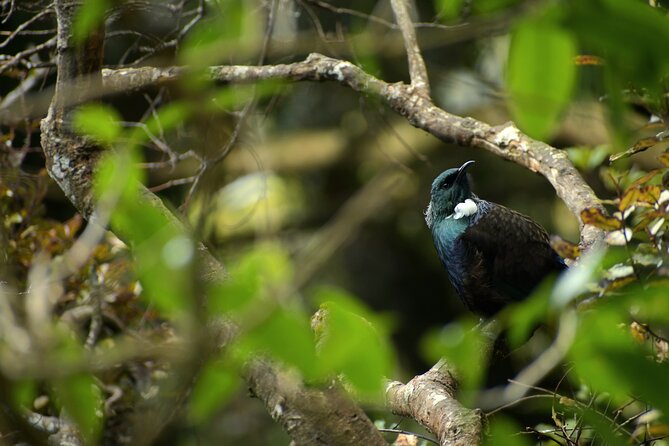
The yellow-eyed penguin is not a common zoo bird that you can simply count on seeing at a set hour. It is an endangered species native to New Zealand, and its behavior can change from day to day.
That uncertainty is part of the reason this experience works best for people who want to understand the animal, not just take a photograph. You learn about the penguin before heading outside, then see how conservation work supports birds that need care.
The name hoiho means noise-maker, a fitting reminder that this is a living wild animal, not a stage performer. The visit gives you useful context before you start looking through the binoculars. If a penguin stays hidden, the conservation story still has value.
I would set your expectations carefully. The yellow-eyed penguin is the focus, but the experience cannot promise a close wild sighting. One outing may produce several good views. Another may offer a bird far away, a few seals, and a beautiful drive to the centre.
More Penguin Tours in New Zealand:
- Oamaru: Penguins Evening Viewing Ticket
★ 4.5 · 682 reviews - Guided Evening Penguin Viewing Otago Peninsula, Dunedin, New Zealand
★ 5.0 · 471 reviews - Dunedin: Wildlife and Penguin Tour
★ 4.6 · 239 reviews
The theatre presentation starts the visit
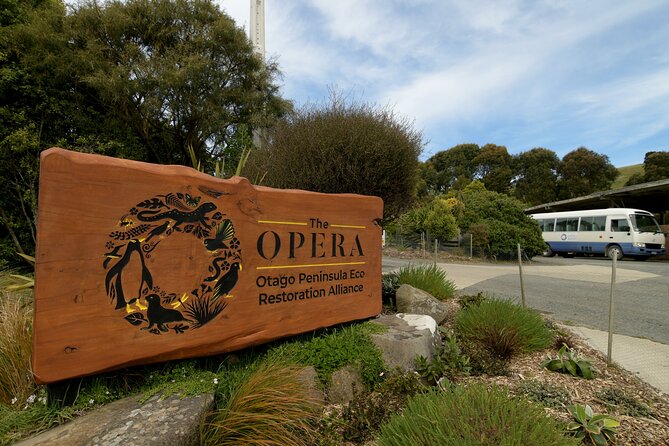
The first part takes place in a theatre setting at The Otago Peninsula Eco Restoration Alliance, known as OPERA. This introduction explains the yellow-eyed penguin and the work being done to protect it.
That opening matters because it changes how you view the rest of the tour. You are not simply scanning the shore for a black-and-white shape. You know what you are looking for and why the species needs protection.
The presentation also helps you understand the purpose of the rehabilitation centre. Conservation is not just about taking people to see animals. It includes care, protection, and efforts to restore suitable habitat.
This section is likely to suit families and first-time wildlife watchers, since it gives everyone the same basic background before the outdoor walk. It also gives the guide a chance to explain what you may or may not see on that particular day.
Inside the rehabilitation centre
Next, you visit the rehabilitation centre, where yellow-eyed penguins and other penguin species can be seen up close when birds are present.
This is often the most dependable part of the wildlife viewing. A penguin in care may be easier to see than one standing far down the coast. You can observe the bird at close range while learning why rehabilitation is needed.
There is a practical limitation. The animals are behind a fence, and the centre may not have penguins present at every visit. That means this stop is not a guaranteed close encounter, though it remains a useful part of the conservation story.
I like this balance. The centre gives you a chance to see the species without asking the wild birds to come closer for your camera. It also makes clear that the tour is tied to active protection work, not just sightseeing.
The visit can be especially rewarding if your wild sighting is brief. Seeing one penguin in the reserve from a distance may feel less satisfying on its own. Pair that moment with a close look at a bird in rehabilitation, and you get a fuller picture of the species.
A short bus ride to the reserve
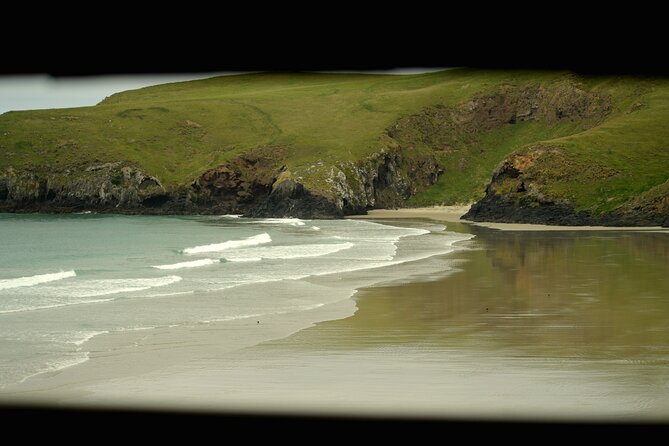
After the indoor sections, you take a short bus trip into the reserve. This keeps the walk focused and avoids turning the 90-minute visit into a long trek from the meeting point.
The reserve section is guided, which matters on a wildlife outing. Your guide can help you scan the area, point out animals, and explain what you are seeing. In a group of no more than 15 people, asking a question should be easier than on a large coach tour.
The bus also makes the arrangement practical for people who want a focused wildlife stop rather than a full-day exploration of the Otago Peninsula. You get from the centre to the viewing area, complete the walk, and return to the same starting point.
No private transfer from central Dunedin is listed, so plan around the stated meeting point at 45 Pakihau Road in Portobello. The activity ends back there. That detail matters if you are building a day around Dunedin or arranging several stops on the peninsula.
A few more birding trips around New Zealand worth a look
- Albatross, seals, and sea birds-Wildlife Cruise
★ 5.0 · 189 reviews - Otago Peninsula In-Depth Tour & Blue Penguins Pukekura Experience
★ 5.0 · 163 reviews - Akaroa: Pohatu Penguins Scenic Nature 2-Hour or 4-Hour Tour
★ 4.9 · 125 reviews - Akaroa: Pohatu Little Penguins 3-Hour Evening Experience
★ 4.8 · 119 reviews
The 2 km nature walk
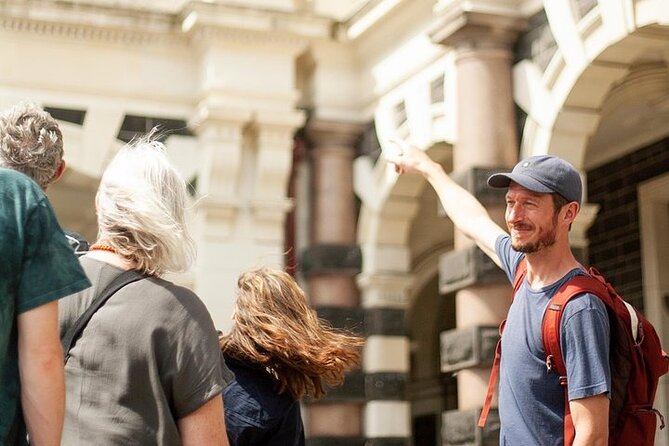
The outdoor portion covers about 2 kilometres, or 1.25 miles. It is described as a guided nature walk and requires a moderate level of physical fitness.
That distance is manageable for many people, but it is not a purely seated wildlife viewing. You should be ready to walk outdoors and spend time looking across the reserve through binoculars.
The supplied binoculars are a real advantage. Yellow-eyed penguins may be hard to spot without them, especially if a bird is near the beach or standing some distance from the viewing area. Good optics can turn a tiny movement into a useful sighting.
The waterproof jackets are just as practical. Otago weather can change, and you do not need to carry your own jacket for this activity. The jackets do not remove the need for sensible clothing, but they make the tour easier to pack for.
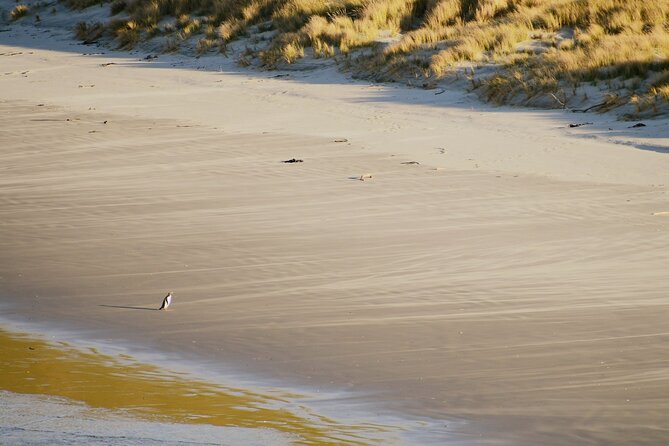
The walk is also where the experience can feel uneven. Wildlife does not appear on cue. One outing included only a barely visible penguin in the wild, while another had a pair at the beach for a long time. The difference is not necessarily a fault in the tour. It is the basic risk of watching wild animals.
What else you might see

A good reason to book this outing is the range of wildlife beyond the hoiho. The reserve may also produce sightings of fur seals, sea lions, and birds.
These animals help make the visit worthwhile when penguins stay hidden. A sea lion or fur seal can be a more obvious sight than a distant yellow-eyed penguin, and the guide can place those sightings in the wider setting of the reserve.
Still, the tour is not presented as a full birding trip or a dedicated seal safari. The main purpose is yellow-eyed penguin conservation. Think of the other animals as valuable additions, not replacements for the main target.
The mix also gives children and mixed-interest groups a better chance of seeing something memorable. Someone fascinated by mammals may enjoy the seals and sea lions, while another person may care most about the penguins and conservation work.
Timing can affect the wildlife viewing
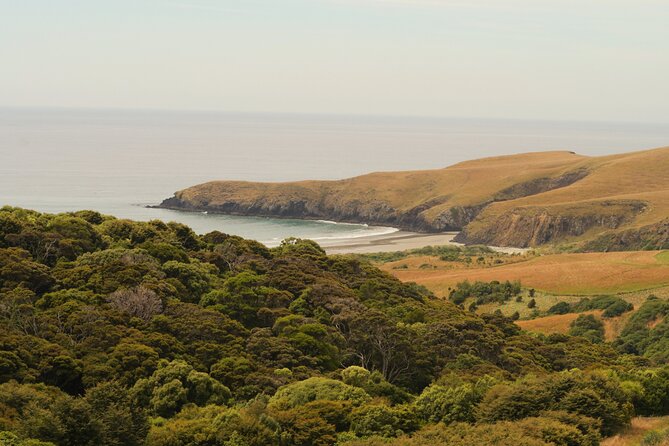
Penguin behavior is unpredictable. A yellow-eyed penguin may return from the ocean at an unexpected time, remain hidden, or appear only in the distance.
One useful tip from the experience is that late afternoon or evening visits may offer better chances. That is not a guarantee, but it is worth considering if your schedule gives you a choice.
You should also allow yourself a little emotional flexibility. A wild penguin sighting may be quick. The bird may not pose in a clear spot, and the best view may last only moments.
If seeing a yellow-eyed penguin at close range is essential to your trip, this activity cannot promise that result. If you want a responsible chance to see the species while supporting conservation work, the uncertainty is easier to accept.
The value of $46.54 for 90 minutes
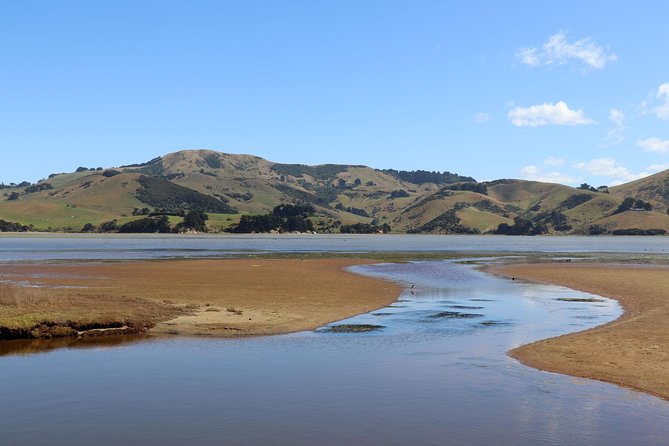
At $46.54 per person, the price is reasonable for a guided 90-minute visit that includes admission, binoculars, waterproof jackets, and the reserve transfer.
The value depends on what you are paying for. You are not buying a guaranteed wildlife photograph. You are paying for access to a conservation centre, an educational introduction, a guided walk, equipment, and the chance to see a rare animal in a protected setting.
The small group improves the value. With a maximum of 15 people, you should have more opportunities to ask questions than you would on a large bus tour. That personal contact is useful when you need help identifying a bird or understanding why a penguin is in rehabilitation.
For a short Dunedin activity, the timing is convenient. It can fit into a day on the Otago Peninsula without taking up half your schedule. The main drawback is that 90 minutes can feel long if wildlife activity is quiet, especially for anyone expecting constant close viewing.
The tour has a 4.8 rating from 27 ratings, with 93 percent recommending it. That points to a strong overall experience, but the range of wildlife outcomes still matters more than the number. You should book for the full program, not only for the promise of a perfect penguin sighting.
Who should book this experience
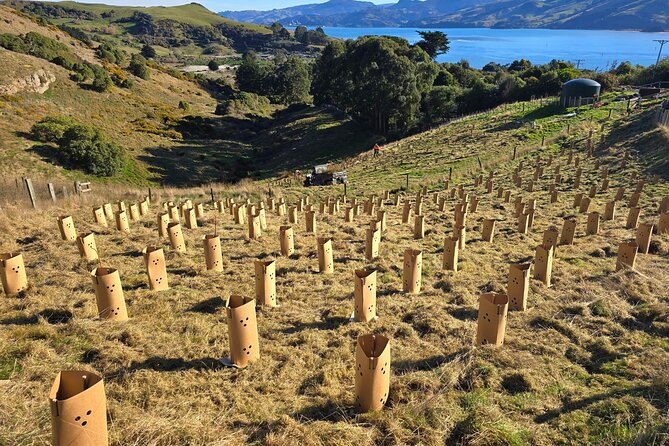
I would recommend this tour to nature lovers, conservation-minded visitors, and anyone with a special interest in New Zealand wildlife. It is also a good choice if you want a short, organized visit rather than a self-guided search.
The activity suits you if you:
- Want to learn about hoiho before looking for them
- Appreciate conservation work and rehabilitation
- Like seeing several types of wildlife
- Prefer a small group with time for questions
- Can manage a 2 km guided walk
- Are comfortable with uncertain wildlife sightings
I would think twice if your only goal is a close photograph of a yellow-eyed penguin. The bird may be far away or absent from view, and even the rehabilitation centre only has penguins when birds are present.
The activity also may not suit anyone who wants a very easy, entirely seated outing. The walk is moderate, and the visit lasts about 90 minutes. Check your plans carefully if you need transport from central Dunedin, since the listed meeting point is in Portobello.
Practical details before you go
The meeting point is 45 Pakihau Road, Portobello, Dunedin 9077. The tour ends at the same location.
A mobile ticket is provided, and confirmation arrives at booking. The group is limited to 15 people. Admission, the guide, binoculars, and waterproof jackets are included. Alcoholic drinks are not included, though that is hardly central to this kind of outing.
The activity requires a moderate physical fitness level because of the 2 km walk. Comfortable outdoor clothing remains sensible even with the supplied waterproof jacket.
Free cancellation is available if you cancel at least 24 hours before the local start time. Cancellations or changes made inside that window are not accepted for a refund.
Should you book the OPERA penguin tour?
Book it if you want a well-rounded introduction to yellow-eyed penguins and local conservation, with a genuine chance to see wildlife in the reserve. The theatre talk, rehabilitation centre, bus ride, guided walk, binoculars, and small group give the short visit a clear purpose.
Skip it if you need a guaranteed close-up penguin sighting or dislike walking in uncertain weather and wildlife conditions. The honest reason to choose this tour is not certainty. It is the chance to learn about hoiho, see animals in care, and perhaps catch a rare penguin behaving naturally on the Otago Peninsula.
FAQ
Where does the Wildlife and Penguin Tour start?
It starts at 45 Pakihau Road, Portobello, Dunedin 9077, New Zealand.
Where does the tour end?
The activity ends back at the meeting point in Portobello.
How long does the experience last?
The tour lasts approximately 1 hour and 30 minutes.
How far do you walk?
The guided reserve walk covers approximately 2 kilometres, or 1.25 miles.
What penguin species is the tour focused on?
The tour focuses on the endangered yellow-eyed penguin, also called the hoiho.
Will I definitely see a yellow-eyed penguin in the wild?
No. Wild penguin behavior is unpredictable, and sightings can range from a close view to a distant bird or no wild penguin sighting.
Can I see penguins up close?
You may see yellow-eyed penguins and other penguin species in the rehabilitation centre when penguins are present. They are viewed behind a fence.
What other wildlife might I see?
The reserve may also offer sightings of fur seals, sea lions, and birds.
Are binoculars and waterproof jackets included?
Yes. High-quality binoculars and complimentary waterproof jackets are included.
What is the maximum group size?
The tour has a maximum of 15 people.
Newest birding reviews around New Zealand
- One Day Birding Adventure★ 5.0 · 7 reviews
- Motuara Island Bird Sanctuary and Ship Cove Cruise from Picton★ 4.0 · 36 reviews
- Otago Peninsula Scenery & Little Blue Penguin tour★ 5.0 · 5 reviews
- Akaroa: Wildlife Cruise with Dolphins and Penguins★ 5.0 · 27 reviews
- Clearwater Private Penguin & Wildlife Tour from Port Otago (5hrs)★ 5.0 · 7 reviews
- Iconic Wildlife Tour with Yellow Eyed Penguins & Royal Albatross★ 4.5 · 33 reviews
- Guided Tour at Pukorokoro Shorebird Centre★ 5.0 · 4 reviews
- Private tour from Auckland – Waitomo Glowworm Caves, Zealong Tea & Kiwi Bird★ 5.0 · 20 reviews
Penguin Tours, side by side.
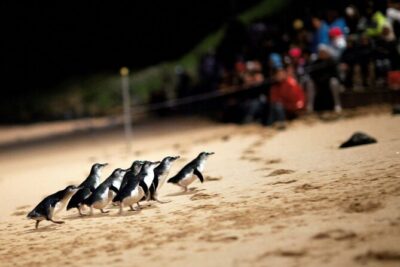
Penguin Parade, & Wildlife Encounters Eco Tour from Melbourne
Read our review →
Cape of Good Hope & Penguins Day Tour with Pickup
Read our review →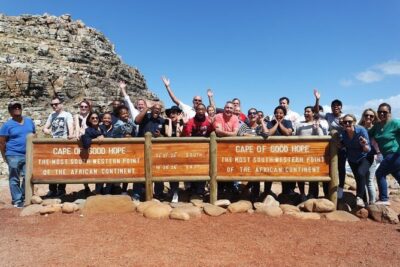
Cape Point and Boulder’s Penguins Full Day Tour
Read our review →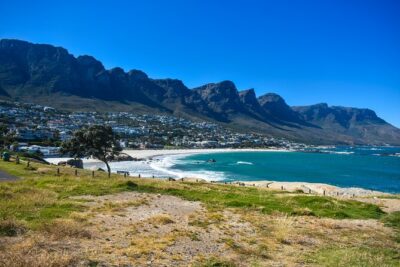
Cape of Good Hope & Boulder Penguins Full-Day Tour from Cape Town
Read our review →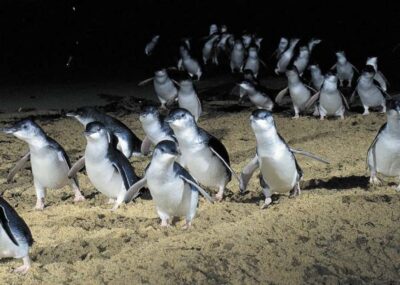
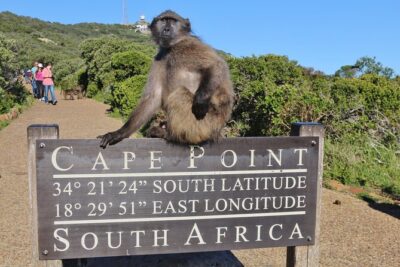
Table Mountain, Penguins & Cape Point Small Group Tour Cape Town
Read our review →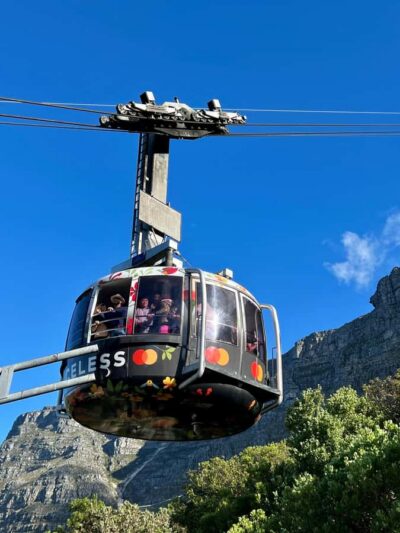
Cape Town Tour: Table Mountain, Penguins & Cape Point+Pickup
Read our review →
Lists this trip turns up in